

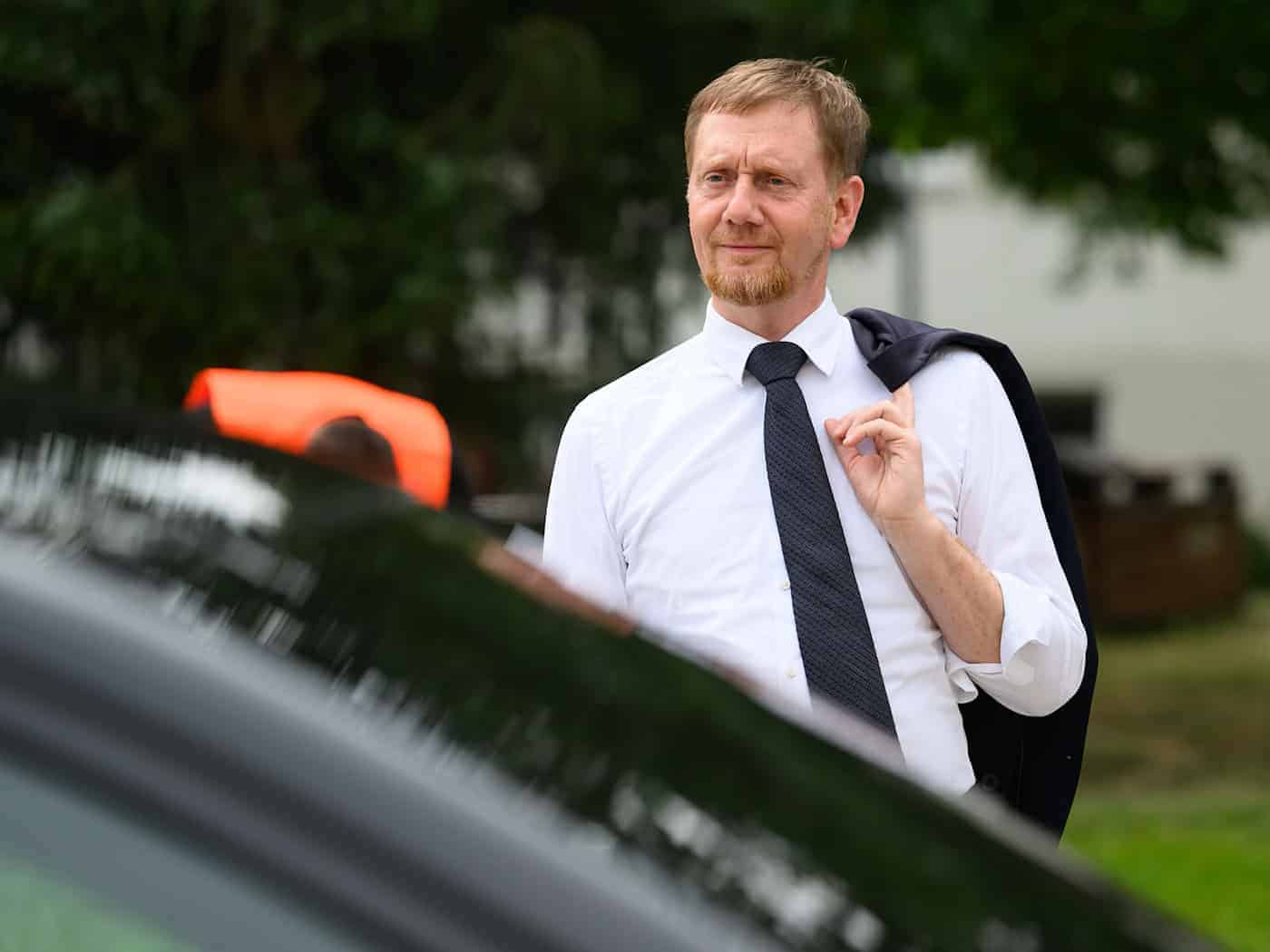
Saxony’s Minister-President Michael Kretschmer (CDU) is calling for further steps following the federal government’s reform package. The reforms must now be consistently pursued, he told the German Press Agency in Dresden, citing, among other things, a reduction in energy prices, faster planning and approval procedures, and measures to modernize the labor market. A lack of reforms could further dampen the mood in Germany, the Minister President warned. “People are increasingly going about their lives with lower expectations when it comes to Berlin.” We cannot accept that Germany remains stuck in an economic depression for seven years. “We need impetus for economic growth. This isn’t rocket science; it’s been done a thousand times in economic policy,” Kretschmer emphasized. Others are doing better than Germany in this regard. “We’ve become too expensive. We need to lower energy costs and roll back regulation.” According to Kretschmer, deregulation is key to growth. “Fewer regulations, more freedom, more opportunities, more leeway—in my view, this isn’t happening to a sufficient extent,” he said, referring, among other things, to the planned tax reform. “The government needs revenue to carry out the tasks entrusted to it. That means, first and foremost, we must reduce those tasks. There must be no tax reform on credit.” Before lowering taxes, other issues need to be resolved, Kretschmer said. He cited the costs of air travel as an example. “We’ve managed to make it ten times as expensive as the Czech Republic—with devastating consequences for Germany as a business location.” “We need a pact for Germany. Trade unions, political parties, and the federal and state governments must all work together,” said Kretschmer. The agreement on federal-state financial relations is proof that Germany still functions as a consensus democracy. “We can reach an understanding, find a common path; party politics takes a back seat to the common interest of Germany.” At its core, what’s needed now is a “jolt,” as former Federal President Roman Herzog once called for. “We’ve heard enough speeches and announcements. Perhaps that’s part of the problem,” Kretschmer explained. He considers what is happening now to be necessary. But before these steps, deregulation should have been the first step. “By that I don’t mean cutting red tape, but above all the question of standards.” “What standards apply to energy conservation? To what standards do we want to build buildings or launch rail projects? What standards do we require of companies? Do we really need the fourth treatment stage for wastewater treatment plants—knowing full well that this will again generate enormous costs?” The federal government has so far been unable to answer such questions because, ultimately, there is a problem of understanding. Kretschmer also sees a gap between aspiration and reality when it comes to renewable energy. “A lofty goal is firmly in place, while economic realities and what is happening around us are no longer even acknowledged. Does it really have to be 100 percent renewables by 2045, or might 80 percent be sufficient by then? These are all factors that prevent Germany from becoming competitive.” Copyright 2026, dpa (www.dpa.de). All rights reserved“People are increasingly going about their lives with lower expectations”
Kretschmer insists on deregulation
A “jolt” is needed
Taking Economic Realities into Account


