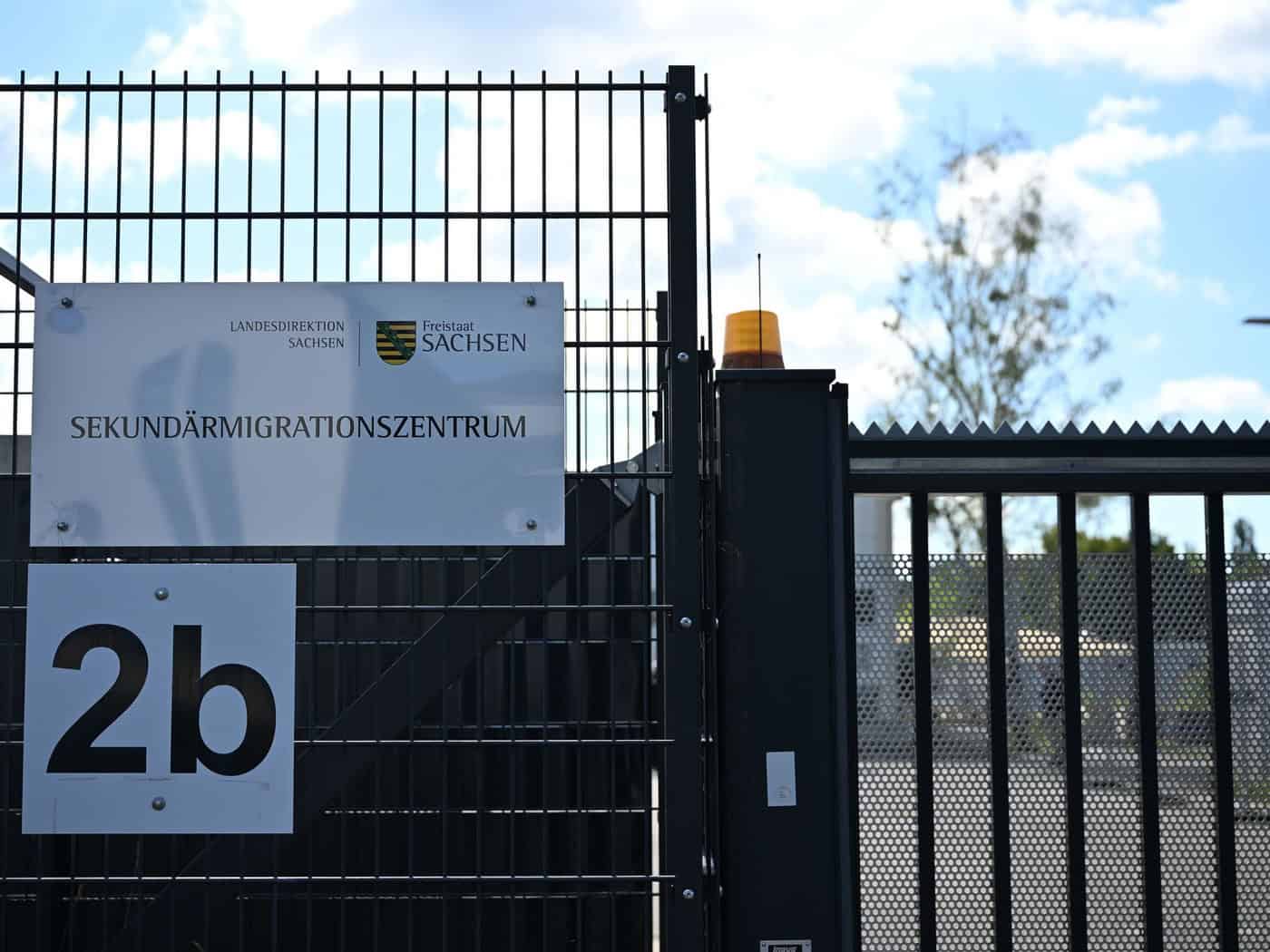
The so-called secondary migration center in Saxony, which opened in July, is operating at about a quarter of its capacity. The residents are asylum seekers whose cases are being processed in another EU country or who are scheduled to return there. As of the end of October, a total of 100 people were housed at the facility, according to the State Directorate. Among them were 25 minors accompanied by at least one parent. The center can accommodate up to 400 people. According to the information provided, in seven cases, an application for voluntary departure to the respective country of origin had been submitted. In four additional cases, consent had been granted for voluntary transfer to the responsible EU member state. The State Directorate reported that the average length of stay for residents was 26 days. The Secondary Migration Center has been in operation since July 1 at the site of the former State Departure Center in Dresden. The facility is part of the implementation of the new Common European Asylum System (CEAS). The focus is to be on encouraging voluntary departures rather than deportations. According to the information provided, the duration of stay at the facility is a maximum of 24 months; for families with minor children, the maximum is 12 months. Solo travelers, unaccompanied children, and adolescents are not housed at the center. Residents are required to register and remain on the premises. Anyone wishing to leave the fenced-in grounds must obtain permission, stating a reason such as a doctor’s visit or a walk. Residents reliably adhere to the guidelines and cooperate with the procedures, according to the State Directorate. The Saxon Refugee Council had expressed legal concerns. The Council explained that the way asylum seekers are housed and distributed “is subject to limits set by the Basic Law, EU law, and the guarantees of the European Convention on Human Rights.” At the center, for example, people’s freedom of movement is restricted, and access to integration, counseling, and support services is significantly impeded. Fewer and fewer asylum seekers have been arriving in Saxony recently. In 2025, their number had halved for the second consecutive year compared to the previous year. According to the Ministry of the Interior, 5,189 asylum seekers were registered; in 2024, the figure was 10,120, and in 2023, 23,120. In addition, the number of voluntary departures by rejected asylum seekers rose. Last year in Saxony, that number stood at 1,588—the highest on record. Due to the decline, accommodation facilities were also scaled back. As of the end of August, the Free State had a standard capacity of 3,355 beds; at peak times, this figure had reached up to 10,000 beds. Copyright 2026, dpa (www.dpa.de). All rights reservedCenter in Operation Since July
Strict Rules for Leaving the Premises
Refugee Council Criticizes Restrictions on Residents
Number of Asylum Seekers Continues to Decline