

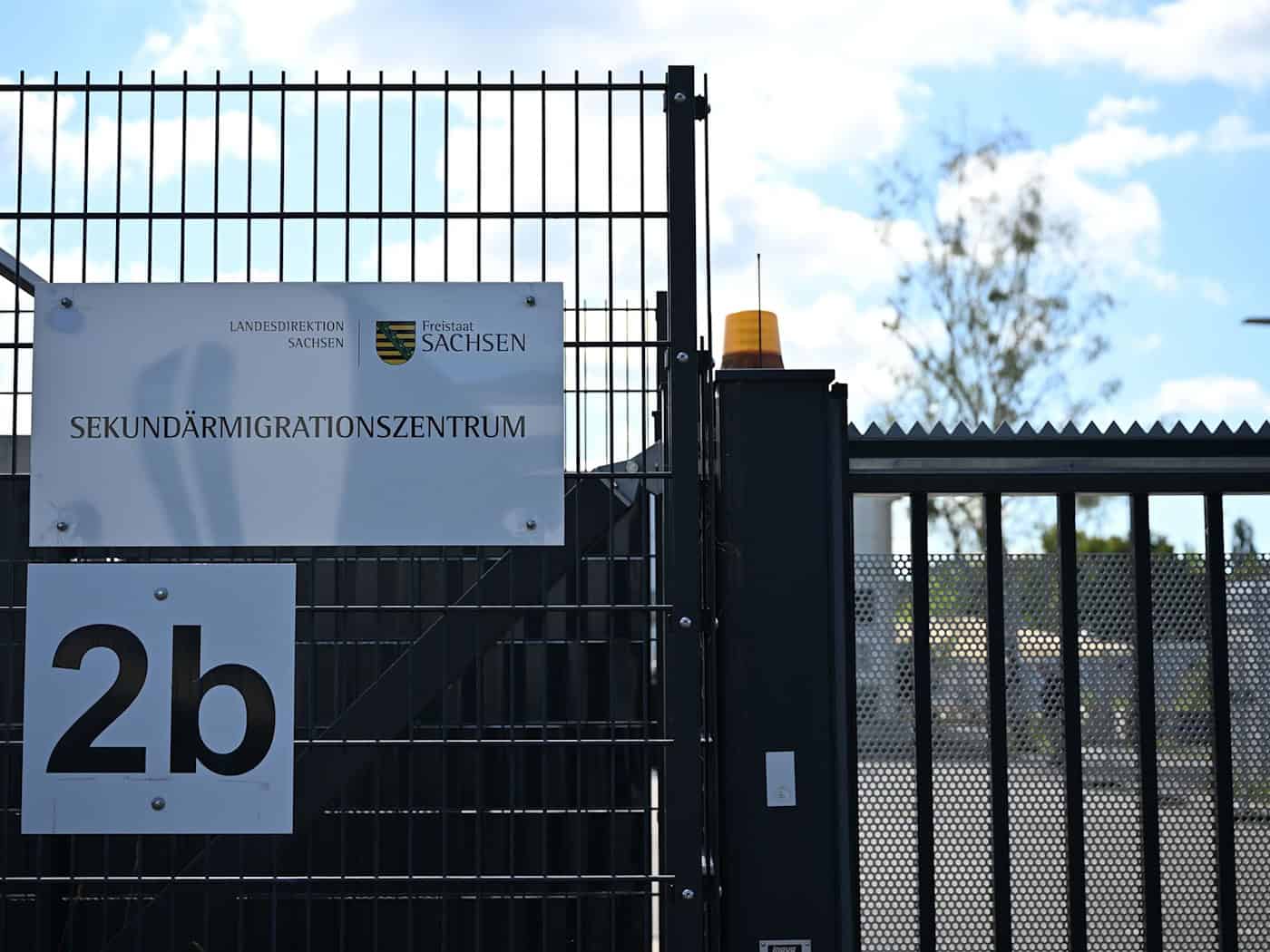
The Saxon Refugee Council has expressed legal concerns regarding the new so-called “secondary migration center” that has opened in the Free State of Saxony. The Council explained that the way asylum seekers are housed and distributed “is subject to limits set by the Basic Law, EU law, and the guarantees of the European Convention on Human Rights.” The fact that people are to be housed there in isolation under restrictive conditions for extended periods raises legal concerns. The new center is intended to house asylum seekers whose cases are being processed in another EU member state or who are to be returned there. The facility in Dresden is part of the implementation of the new Common European Asylum System (CEAS). The focus is to be on encouraging voluntary departures rather than deportations. The facility has been operational since July 1 at the site of the former State Departure Center in Dresden; however, no one is currently residing there under the new regulations. Solo travelers, unaccompanied children, and adolescents will not be housed at the center. Youth welfare offices remain responsible for their care. People are to be housed at the center for a maximum of 24 months; families with minor children for a maximum of 12 months. Under the new rules, residents at the center in Saxony are required to register and remain on the premises. The Refugee Council explained that the center would also restrict people’s freedom of movement and make access to integration, counseling, and support services considerably more difficult. “Such an approach carries a significant risk of leading to the treatment of asylum seekers in violation of human rights,” the statement said. Reception conditions should not be deliberately worsened to achieve migration policy goals, the Refugee Council emphasized. Long-term accommodation could significantly exacerbate depression, anxiety disorders, the effects of trauma, and social isolation. Copyright 2026, dpa (www.dpa.de). All rights reservedRefugee Council: Housing Poses Health Risks


