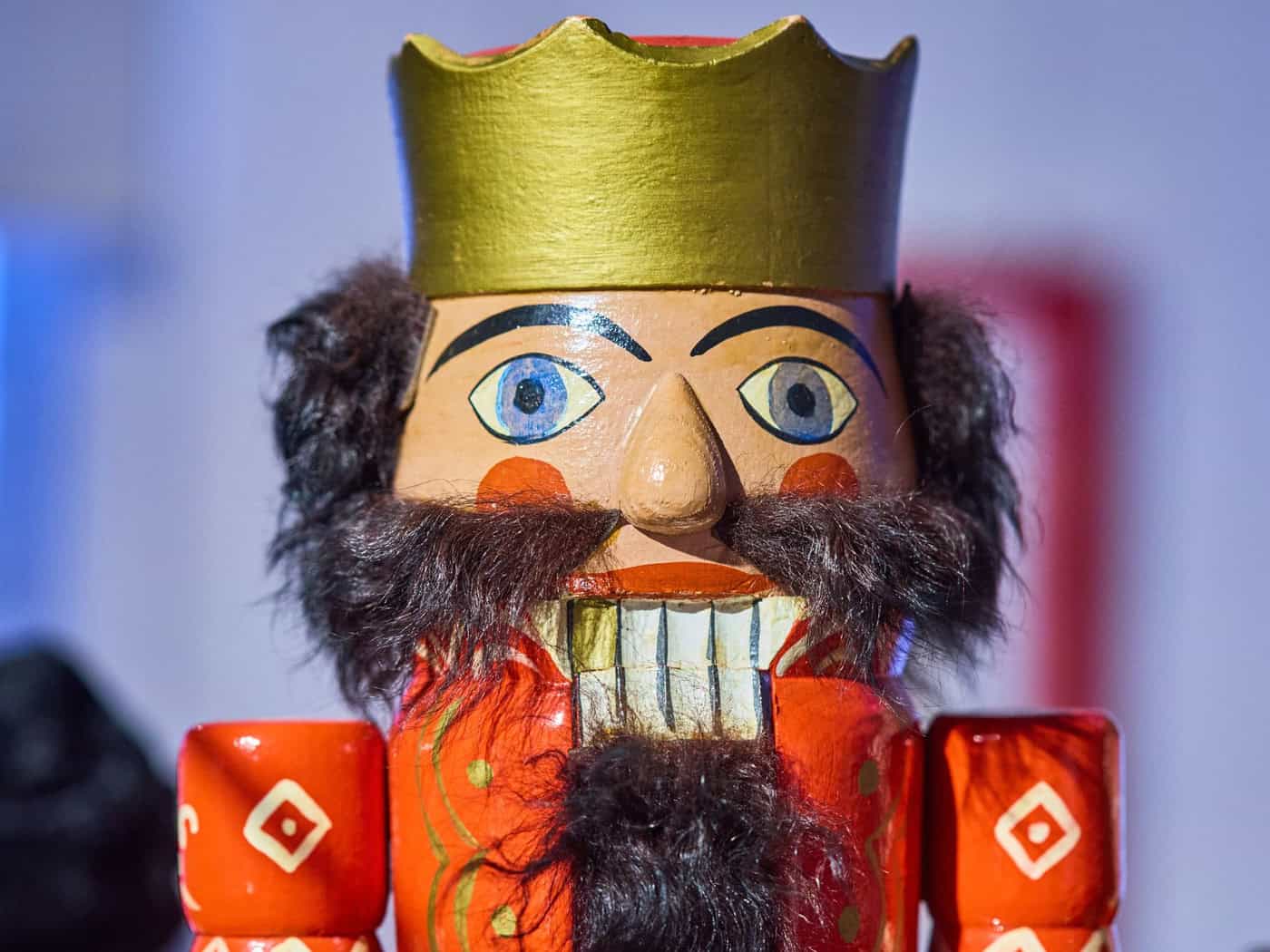
The famous nutcrackers from the Ore Mountains were out of reach for many people in the GDR, since they were mainly exported. So what did people do? They turned to creative DIY solutions. Anyone who knew how to turn wood crafted these decorative wooden nutcrackers in their garage or hobby room. One of them was Heinz-Michael Krätzel from near Wismar. “When he realized that miners weren’t really a thing up north, he also carved Viking and pirate nutcrackers,” explains art historian Henry Gawlick. Gawlick directed the Museum of Everyday Culture of the Griesen Region in Hagenow (Ludwigslust-Parchim district) for 30 years. In his private life, the passionate collector assembled a collection of nutcrackers, which he will be displaying starting Wednesday in Schwerin at the exhibition spaces of the Mecklenburg Foundation. The exhibition, titled “My Name Is Hansel, I Crack Nuts!” is scheduled to run through February 7. About 100 pieces are on display. The oldest dates back to 1764 and is on loan from the Schönberg Museum of Folk Culture (Nordwestmecklenburg district). Among the most recent is a one-meter-tall Angela Merkel nutcracker weighing 14 kilograms. However, the exhibition focuses on homemade nutcrackers from the GDR. Not all of them are perfect, but each one is unique. “This is folk art in the best sense of the word and worth collecting,” says expert Gawlick. Especially since this era is now a thing of the past. “After the fall of the Berlin Wall, it was all over,” explains the historian. Not only did the shortage come to an end, but a flood of cheap Christmas products—including nutcrackers—soon arrived from China. According to Gawlick, the idea that the nutcracker figure was invented in the Ore Mountains is a myth. “We know of figurative wooden nutcrackers from the Alpine region dating back much earlier.” The nutcracker first appeared in literature in 1816, in E. T. A. Hoffmann’s “The Nutcracker and the Mouse King.” Thuringia, too, predates the Ore Mountains in this regard. Production in the Ore Mountains did not begin until around 1870. Lever-operated tools for cracking nuts have existed since ancient times, made of iron, just as they are still manufactured today. The nutcracker’s second career as a decorative object is remarkable to Gawlick. “I don’t know of any other utilitarian object,” he says, “that has achieved such widespread popularity as a decorative item.” Copyright 2026, dpa (www.dpa.de). All rights reserved“Folk art in the best sense”
Where does the nutcracker come from?