

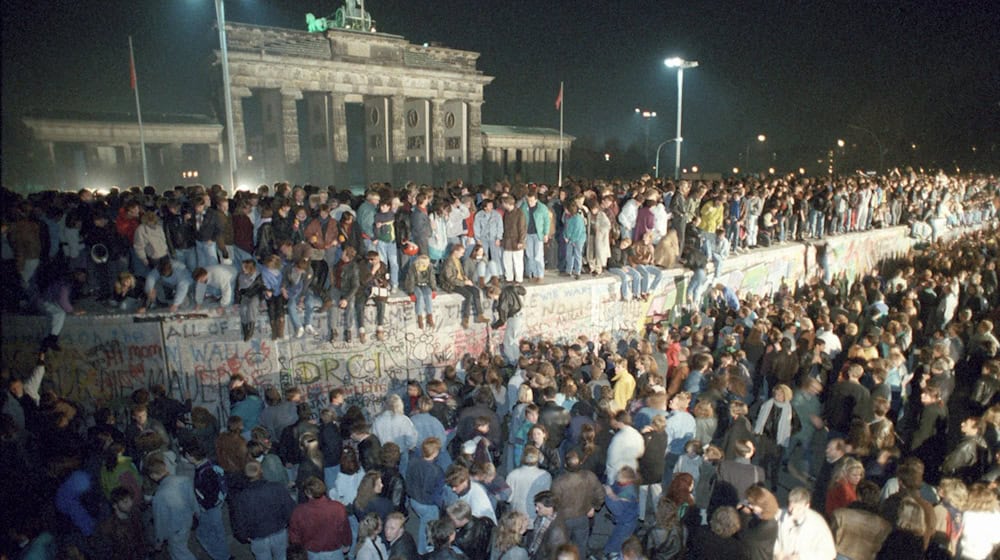
Divided and reunited: the Dresden Symphony Orchestra invites you on a journey through time in the Hofer Freiheitshalle on the Day of German Unity. Under the title "Drüben", the long division of the country will be brought to life through music. At the beginning, a wall separates the hall, orchestra and audience. Whether you are seated in the eastern or western half is decided by chance. For the first part of the concert, seats are drawn by lot. Uniformed border guards patrol the edge of the stage, conductor Jonathan Stockhammer stands on a watchtower. "Anyone who did not experience the time of Germany's division will now be thrown into it and experience history at first hand," says the announcement. The concert was already shown in 2022 at the Kulturpalast in Dresden and was staged by actor Tom Quaas. The idea came from artistic director Markus Rindt, who himself fled the GDR via Prague in 1989 and arrived in Hof on a special train. Rindt claims that reunification also shaped the lives of many orchestral musicians. He therefore feels that the "Over there" program is very personal. In the West, "over there" referred to the so-called Eastern zone - the territory of the GDR. In the East, on the other hand, many understood it to mean the West. Now "drüben" is also intended to make references to the present. "Two commissioned compositions by the Dresden Symphony Orchestra reflect on the joy of unity at that time, today's exaggerated nationalism and the walls in the world and in people's minds," it said. The concert begins with the song arrangement "Hüben und Drüben". Pop and rock songs from East and West show that there were system-related differences, but also great similarities. This is followed by a work by Munich composer Markus Lehmann-Horn, who also quotes sound material from various hymns and songs in his "Utopian Melodies - yelling at Me!". After the break, all the musicians are reunited for the piece "Landmark" by British composer Charlotte Bray. The concerto for piano and winds by Igor Stravinsky rounds off the program. "Looking back at the time of German reunification shows that it takes people who seize opportunities for themselves and others and make courageous decisions," says Rindt. Charlotte Bray sees the unification of East and West Germany as a monumental moment and at the same time looks beyond Germany's borders: "While German society is growing together and steadily consolidating, our world is unfortunately haunted by an underlying sadness based on increasing division and alienation." The Dresdner Sinfoniker were founded at the end of the 1990s and play exclusively contemporary music. They are made up of musicians from several European orchestras and come together in different formations for special projects. This is often associated with a political message. In 2017, for example, they protested musically at the border between Mexico and the USA against the wall planned by US President Donald Trump. In 2013, they performed a symphony for Palestine in the West Bank with colleagues from Arab countries. Copyright 2025, dpa (www.dpa.de). All rights reservedConcert aims to bring history to life at first hand
Here and there
Two commissioned works by the symphony orchestra in the program
Dresdner Sinfoniker repeatedly with political messages


