

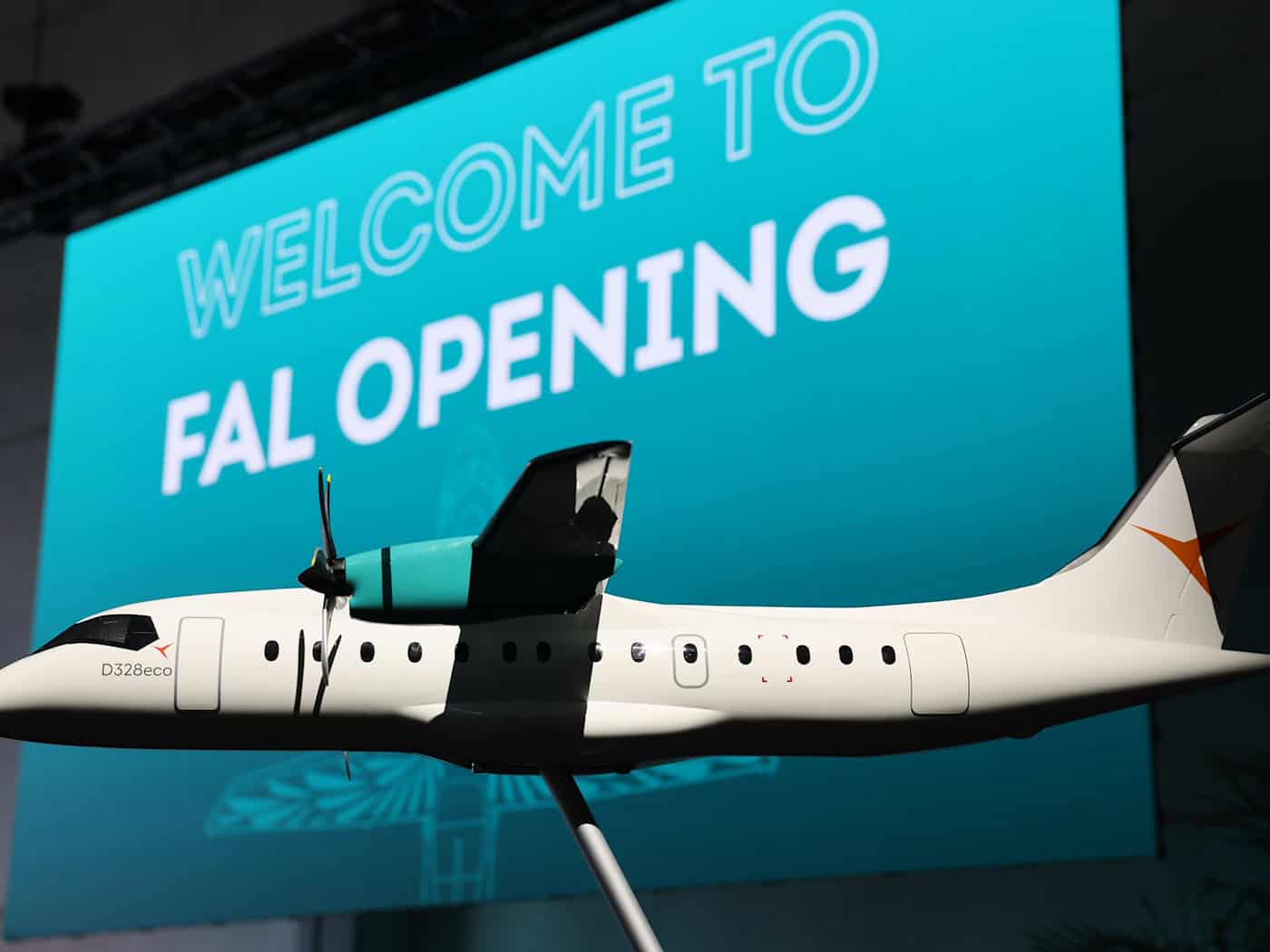
Regional aircraft are set to be built at Leipzig/Halle Airport in the future. A final assembly line for the D328eco regional aircraft has been established on a site roughly the size of eight soccer fields, according to aircraft manufacturer Deutsche Aircraft. Up to 48 aircraft can be built per year. The first D328eco test aircraft assembled in Schkeuditz near Leipzig is scheduled to be completed in the first quarter of 2027. Series production of passenger aircraft is set to begin in 2028. According to the company, the total investment amounts to more than 100 million euros, and approximately 250 new jobs have been created. The turboprop aircraft—that is, a propeller-driven regional aircraft with a turbine engine—is designed to carry around 40 passengers and consumes significantly less fuel on short routes than larger jets. The new aircraft is designed for sustainable aviation fuels (SAF), which, when considering the entire lifecycle from production onward, emit significantly less CO2 than conventional kerosene. Today, aircraft that are too large are often used on short-haul flights, said site manager Sebastian Böhnl of Deutsche Aircraft. Smaller aircraft are significantly more economical for these routes. “There is a demand for regional aircraft.” The concept, then, is this: Instead of fewer flights with large aircraft, more direct connections could be established using smaller aircraft—often as feeder services to international hubs. Smaller airports would also benefit from this. The smaller and more efficient aircraft are intended to make these routes profitable again. The potential market extends beyond traditional regional airlines. “Initial discussions are already underway with the Ministry of Defense and the Ministry of the Interior regarding a potential use,” said Markus Hahner, Director of Business Development, Military, and Security at Deutsche Aircraft. For several years now, the U.S. Air Force has been using the predecessor model to transport supplies or evacuate the wounded. “It’s a short-takeoff aircraft that can also land and take off from unpaved runways.” The aircraft is also suitable for border surveillance or as a firefighting aircraft. The current launch marks the return of aircraft manufacturing to Saxony and a significant milestone for the D328eco program, said Nico Neumann, CEO of Deutsche Aircraft. “Building on Dornier’s pioneering spirit, this milestone strengthens the resilience, competitiveness, and technological sovereignty of Germany as an aviation hub.” According to the aircraft manufacturer, Leipzig/Halle will serve as the center for aircraft assembly and delivery to international customers in the future. Development, flight testing, and certification will remain in Oberpfaffenhofen, Upper Bavaria. For Saxony’s Minister President Michael Kretschmer, the opening of the final assembly line underscores Saxony’s importance as a high-performing industrial and aviation hub with a promising future. “Investments like those by Deutsche Aircraft strengthen our aviation industry, create highly skilled jobs, and increase Saxony’s appeal for international industrial projects,” the CDU politician emphasized in a video message. Aviation expert Hartmut Fricke sees a definite future in smaller, more fuel-efficient aircraft. Modern regional aircraft “could bring about a renaissance in air travel,” the professor of aviation technology and logistics at Dresden University of Technology told the German Press Agency. Traditional short-haul flights with large jets are barely profitable for many airlines anymore. At the same time, rail and road transportation have recently become less reliable. The demand for fast connections between smaller cities is therefore “higher than it has been in a long time.” Copyright 2026, dpa (www.dpa.de). All rights reservedDesigned for 40 passengers—smaller planes are more economical
Initial Discussions with the Ministry of Defense
The concept: more direct connections with smaller aircraft


