

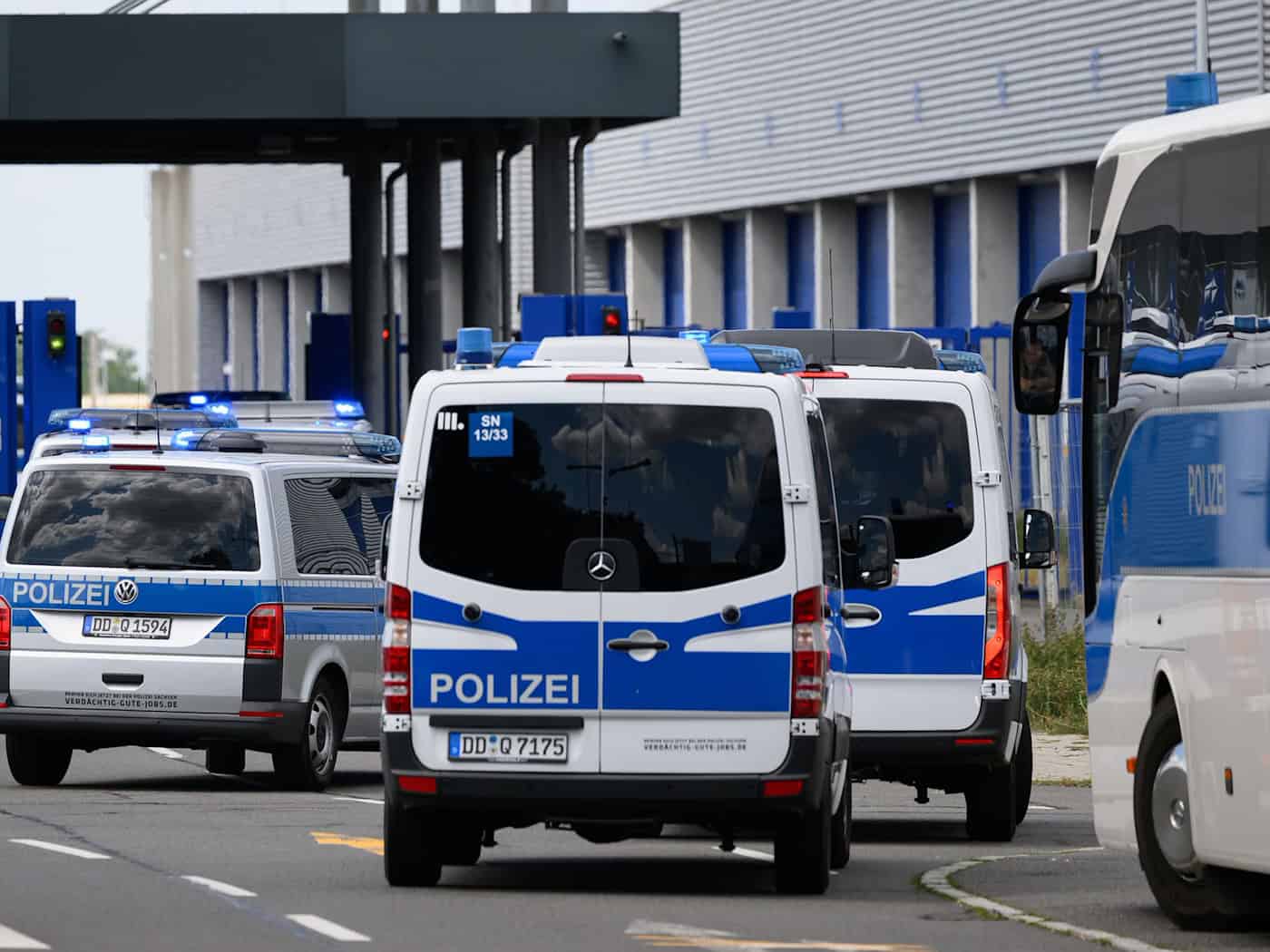
A drone loaded with explosives at a German airport: The incident set off alarm bells, prompting Federal Interior Minister Alexander Dobrindt (CSU) to rush back from vacation to Leipzig. What questions remain, and what is the current state of security in the country? Hybrid attacks or threats do not aim for a direct or even military confrontation, but are primarily intended to create uncertainty. These operations take place covertly and can include cyberattacks, political influence operations, or espionage. States are often considered the masterminds behind such operations—for example, Russia, which has been accused of waging disinformation campaigns in Western countries. Dobrindt refrained from assigning blame but said that this was a competition that “may also involve foreign powers” who apparently sought to contribute to considerable uncertainty in Germany. Alexander Throm (CDU), the domestic policy spokesperson for the CDU/CSU parliamentary group, commented on the incident in Leipzig: “There is much to suggest that the threat of hybrid warfare has now spilled over into Germany.” According to Dobrindt, the security situation in the country has worsened. “The threat is no longer abstract; it is high,” he said after a meeting with representatives of security agencies in Leipzig. A spokeswoman elaborated. “Federal and state security agencies are seeing an increased volume of intelligence reports,” she told the German Press Agency. The range of threats extends from reconnaissance, espionage, and sabotage of critical infrastructure sites to cyberattacks and the planning of physical violence against representatives of the business community and civil society. In general, according to the federal government, significantly more illegal drones have been spotted over critical infrastructure in Germany since the start of Russia’s war of aggression against Ukraine. No. Critical infrastructure presents particularly attractive targets for political actors, as demonstrated by far-left extremist attacks on rail lines and, presumably, Berlin’s power supply as well. Critical infrastructure includes sectors that ensure the supply of particularly important goods and services. Outages or disruptions would have dramatic consequences. According to the official definition, these include energy and water supply, food, finance and insurance, information technology and telecommunications, media and culture, municipal waste disposal, government and administration, as well as transportation and traffic. Laws and regulations are being adapted to new threats and technological advancements. For example, at the beginning of the year, the Bundestag passed a new “Kritis Umbrella Act,” which imposes stricter requirements on operators of critical infrastructure to protect their facilities and defend against attacks. Following the commotion over disruptions at Munich Airport caused by drones flying over the airport last fall, a Joint Drone Defense Center was established by the federal and state governments within the Federal Police. Security agencies, the Bundeswehr, and intelligence services are to exchange information and coordinate operations there—as Dobrindt now says also happened in the case of Leipzig. Following an amendment to the Aviation Security Act passed in the spring, the states can more easily request administrative assistance from the Bundeswehr in defending against drones. It will never be possible to completely prevent such attacks. But politicians and experts also see room for improvement when it comes to defense. According to the Airport Association, a number of major airports are still waiting for the equipment promised by the Ministry of the Interior—systems for detecting and defending against drones. CDU domestic policy expert Throm says that progress is being made every day in developing defense measures against hybrid attacks. “However, there is still a need for clarification regarding the division of responsibilities for drone defense among the Bundeswehr, state police forces, and the Federal Police. Much of the equipment is already operational. But the procurement of drone defense technology also depends on availability from manufacturers.” Green Party domestic policy spokesperson Konstantin von Notz calls for “crystal-clear responsibilities, for example in drone defense,” which Dobrindt has so far avoided addressing. Among other things, he says, a daily situation report is needed. “All acts of sabotage and espionage must be documented and communicated, and above all, must be centralized at a coordinating body. Only in this way can we succeed in building the necessary investigative and search pressure, apprehending perpetrators, averting dangers, and not constantly playing catch-up with the situation.” The police union is calling for a clearer legal framework, better equipment for police agencies, and the establishment of a nationwide drone defense infrastructure. Copyright 2026, dpa (www.dpa.de). All rights reservedWhat does Dobrindt mean when he speaks of a “hybrid attack scenario”?
What is the security situation in Germany?
Is this limited to airports?
What are policymakers doing?
Is that enough?


