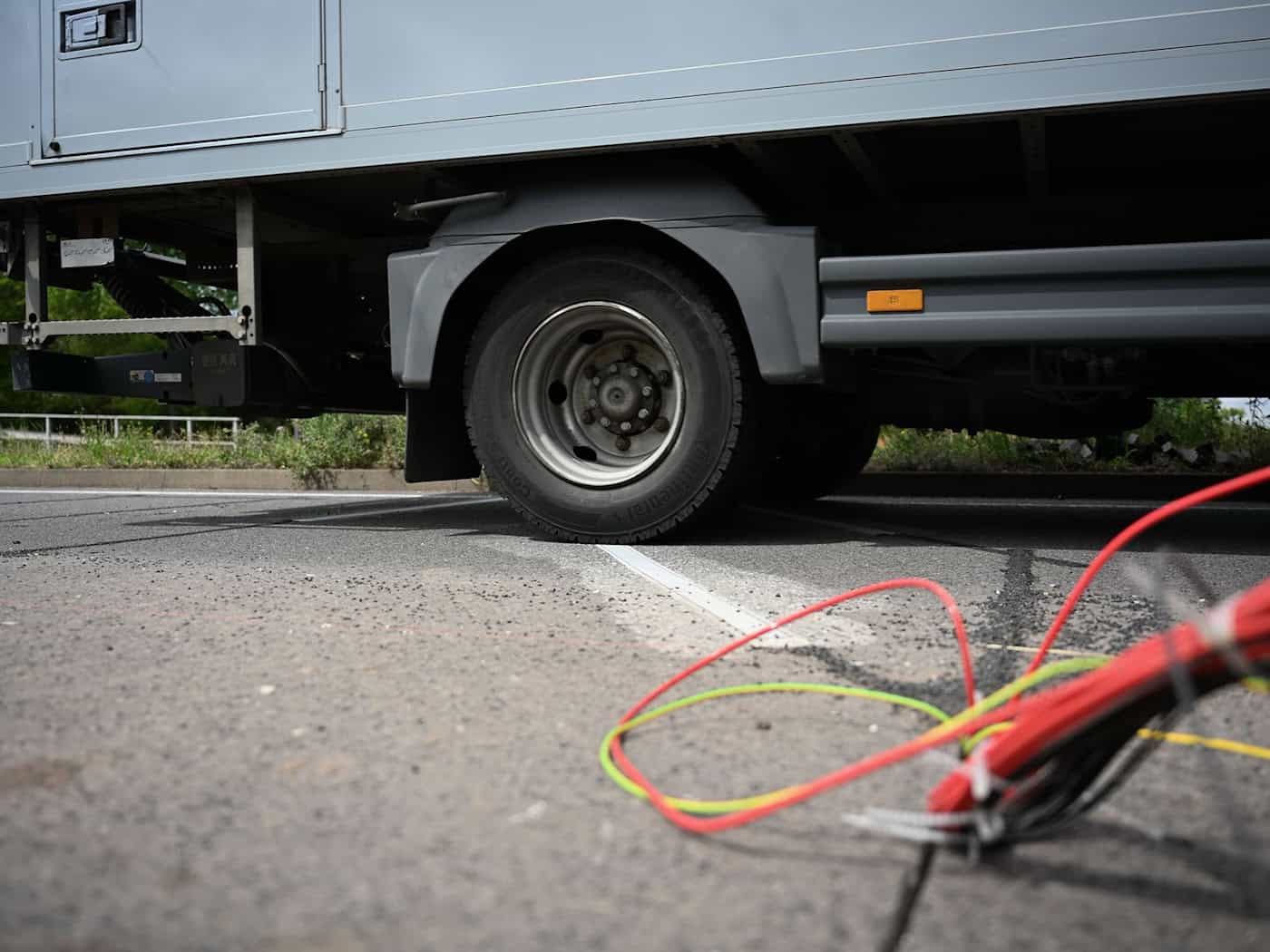
Heat, cold, heavy trucks—Dresden wants to use sensors to measure how these factors affect its roads. To this end, the state capital is installing measuring beams in the asphalt at five locations around the city center. Other municipalities are also set to benefit from the data. Until now, the condition of the roads has primarily been assessed based on cracks and ruts. The city wants to prevent such damage from occurring. By the time it appears, it’s actually already too late, said Peter Lebelt from the technical inspection department at the Road and Civil Engineering Office. The data collected by the sensors will be used to predict how quickly the road is deteriorating, so that action can be taken before cracks appear, if possible. The software being developed for this purpose will be open source and thus freely available—including to other municipalities. The sensors measure weight and temperature. When it comes to weight, the focus is primarily on trucks. Cars are recorded, but not factored into the models, according to Lebelt. Asphalt reacts differently to weight in cold and hot weather. “In winter, it’s very hard, and in summer, it can be rather soft,” he said. There are already three other monitoring stations, with one more to come. At the same time, a special vehicle will be driving through Dresden until September, collecting data on road damage—such as potholes, ruts, bumps, and cracks. The project is receiving 1.3 million euros in funding. These funds come partly from the Kreditanstalt für Wiederaufbau (KfW) and partly from the state capital of Dresden. The project is part of the “Smart City” pilot project run by the city and the Technical University of Dresden. Copyright 2026, dpa (www.dpa.de). All rights reservedPart of the Smart City