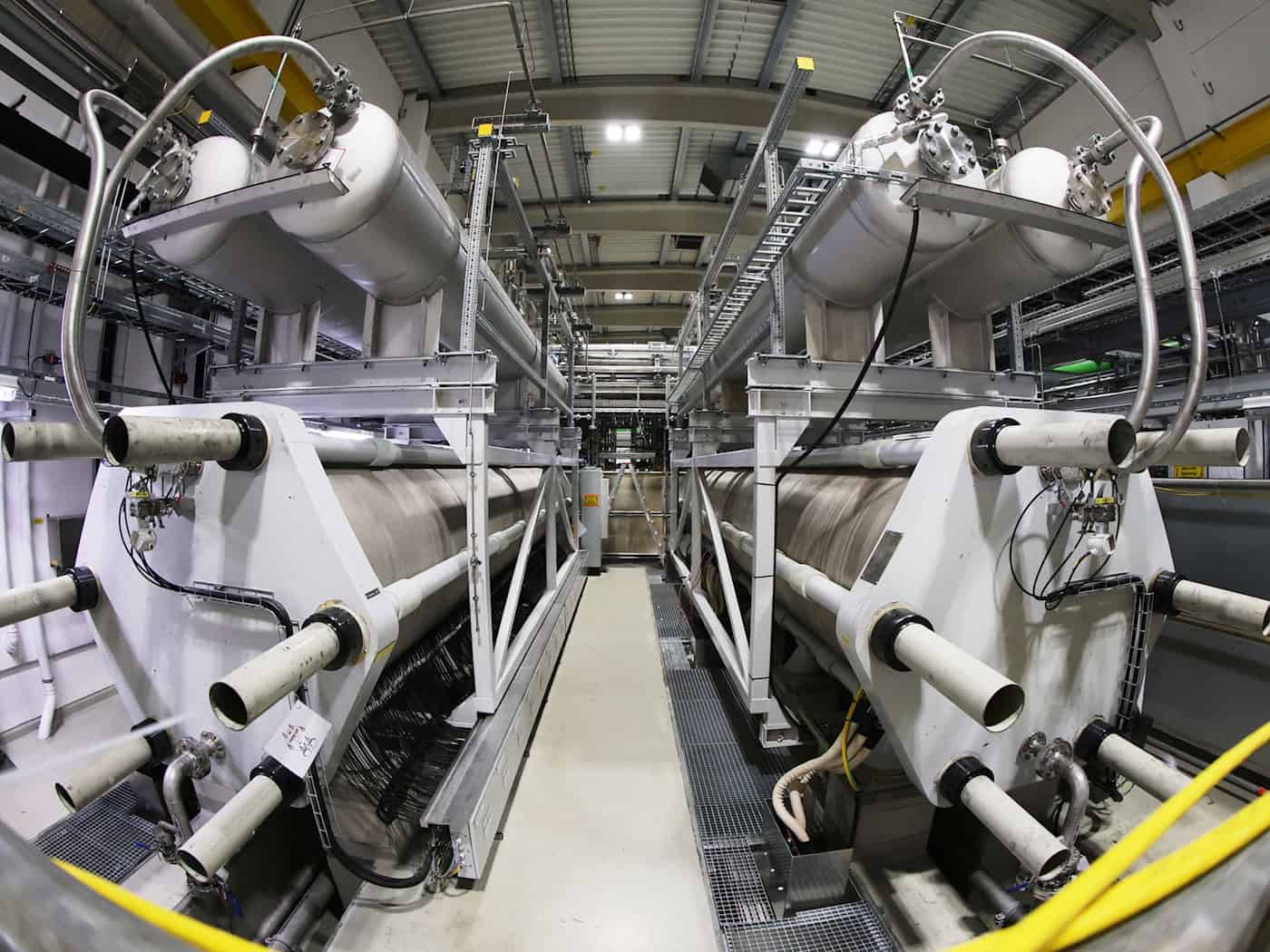
"Green hydrogen" has been produced for the first time at the Bad Lauchstädt Energy Park. “With the production of this first hydrogen, we are moving closer to our shared goal of converting renewable energy into an industrially usable energy source,” said Konstantin von Oldenburg, Managing Director of Trading & Sales at VNG. Production has already been underway for several days, said Holger Kreetz, Chief Operating Officer at Uniper. TotalEnergies plans to begin supplying customers with “green hydrogen” in early 2027. The connected wind farm supplies the electricity for hydrogen production. In a unit known as an electrolyzer, this electricity is used to split water into hydrogen and oxygen. The wind farm has a capacity of about 50 megawatts, while the electrolyzer has a capacity of 30 megawatts. These figures describe the capacity of the facilities, not the amount of hydrogen produced. Regular deliveries to industry have not yet begun following the initial production run. The project partners are now verifying that all steps function reliably together: from electricity generation through hydrogen production and gas purification to transportation. During purification, impurities are removed so that the gas meets the quality standards required for industrial applications. To this end, a former natural gas pipeline approximately 25 kilometers long has been converted for hydrogen. In the future, this pipeline will carry the energy carrier into the hydrogen network of the Central German chemical industry and be used at the TotalEnergies refinery in Leuna. According to the plan, TotalEnergies is set to purchase approximately 3,000 metric tons of hydrogen next year. The long-term purchase agreement with the company was already in place when the final investment decision was made, said von Oldenburg. This commitment made the project possible in the first place. “The key now is for the entire process chain to function reliably in operation,” said Kreetz. This refers to the steps from the wind farm to the transport of the gas. The entire system is scheduled to be fully operational in 2027. Initially, industry is envisioned as the primary user. The project also cites solutions for urban transportation as a potential future application. Infrastructure alone is not enough to expand the hydrogen economy in Germany, said Kreetz. More customers are needed, as well as the opportunity for companies to switch their production to hydrogen in a sustainable and affordable manner. To achieve this, policymakers must create reliable framework conditions. “That’s the major piece that’s still missing right now,” he said. VNG Chief Technology Officer Hans-Joachim Polk said that the experience gained in Bad Lauchstädt could help other projects. “We want to encourage others,” he said. Timm Kehler of the Gas and Hydrogen Industry Association also urged patience: “The hydrogen ramp-up will take a little while longer.” The conviction that hydrogen has a future remains strong within the industry. However, it seems that the issue no longer carries the same weight within the ministry responsible for energy as it did a few years ago. While there is still an understanding of the importance of this energy source, reliable political framework conditions are lacking. The project partners are investing a total of 210 million euros in the initiative. This includes 44 million euros in federal funding. Copyright 2026, dpa (www.dpa.de). All rights reservedHow Wind Power Is Turned Into Hydrogen
A converted pipeline is set to run to Leuna
The hydrogen market needs more customers
The federal government is funding the project with 44 million euros