

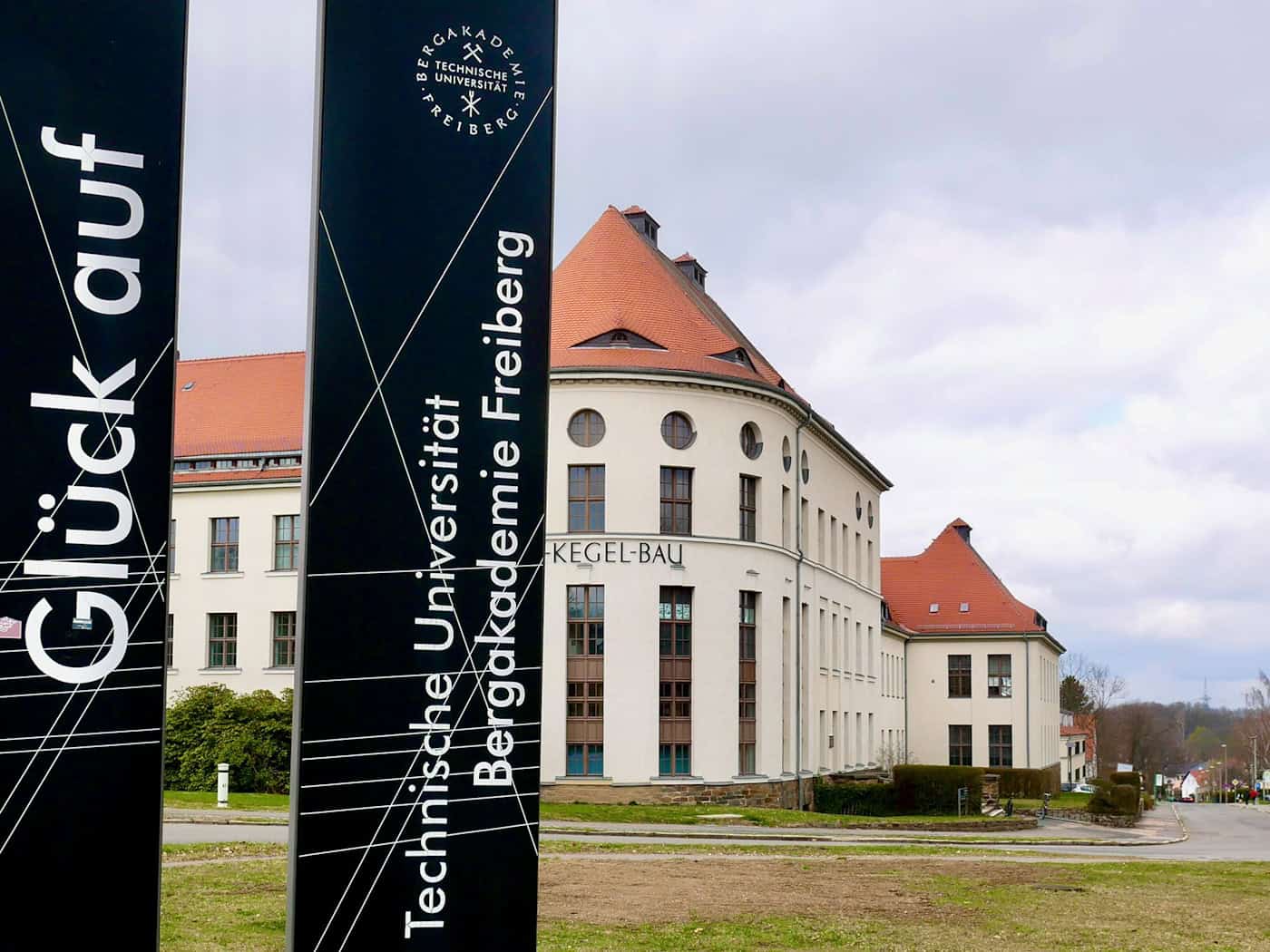
Saxony offers particularly favorable geological conditions for the occurrence of so-called white hydrogen. Under the right conditions, ferrous rocks, such as those found in the Ore Mountains, could be the basis for the underground production of hydrogen in a natural way, said Professor Moh'd Amro, Director of the Institute for Drilling Technology and Fluid Mining at the TU Bergakademie Freiberg, to the German Press Agency. Hitherto, hydrogen has mainly been produced from fossil fuels such as natural gas or by electrolysis. "White" hydrogen, on the other hand, is produced in the earth's crust through the reaction of suitable rocks with water, as a result of which hydrogen can be formed. "We now know that there are deposits worldwide where hydrogen is continuously being formed underground," said Amro, referring to discoveries in Mali, Australia and Siberia, for example. "The question is: do we have something like this here too - and if so, where?" The mining expert sees several conditions for Saxony. On the one hand, there are known deposits of suitable magmatic rock types in the Ore Mountains, from which hydrogen can be produced through chemical reactions. Amro refers, for example, to serpentinite, which is mainly used as a decorative stone. The local museum in the "serpentine stone town" of Zöblitz in the Ore Mountains is dedicated to its use and history in the region. On the other hand, the region's subsurface is better documented than almost anywhere else in Europe due to decades of uranium and ore mining. "In my view, the geological conditions in the Ore Mountains are very promising," said Amro. Suitable rocks, a constant supply of water and the right pressure and temperature conditions are crucial. In addition, a dense overburden is needed to hold back the hydrogen like a trap. "When these ingredients come together, it is worth drilling a well to search for hydrogen." There is as yet no concrete evidence of an economically viable hydrogen deposit in Saxony. The Saxon Mining Authority, which is responsible for supervision and approval in mining throughout the state, has seen virtually no activity in this direction to date. Saxony's highest mining authority has "currently not received any applications or inquiries in this regard", said head Bernhard Cramer when asked. The federally owned Wismut GmbH, which manages the legacy of decades of uranium mining in Saxony and Thuringia and is still remediating abandoned sites, also confirms only very isolated indications. In the 1960s, several gas leaks were investigated at the bottom of the Schlema-Alberoda mine in the Ore Mountains, according to a response from the company. In the process, low levels of hydrogen were found "selectively" in the escaping mine water. "The measurements were not exploratory in nature," the company emphasizes. There was therefore no targeted search. And despite numerous boreholes drilled by the former SDAG Wismut, there is no "representative data basis". However, even these isolated indications are important for mining expert Amro. "That's enough - it's already an indication," he said, referring to the Schlema measurements. Most of the hydrogen sources known worldwide to date have been accidental discoveries. This is because there has been no systematic search for it to date. "We have thousands of boreholes underground in Germany, mainly from oil and gas exploration," said Amro. "But hydrogen hasn't been an issue so far - either it hasn't been measured at all or the measuring devices weren't sensitive enough." The reason: the use of natural sources of the colorless gas has simply not played a role in the past. Instead, it was at best perceived as a safety risk and disruptive factor in mining. But if Amro has his way, that should now change. The researcher refers to his colleagues at the University of Erlangen-Nuremberg, who are searching for hydrogen deposits in the Haßberge region in northern Bavaria. Similar research work is also being carried out in the Pyrenees. In the Ore Mountains, geologists would now first have to provide precise indications of where olivine and serpentinite rocks actually occur. Targeted drilling could then provide cores from these areas, which could be tested for hydrogen formation in the laboratory. "Every borehole provides us with valuable information about the subsurface - in the best case, even hydrogen." The problem: drilling is expensive. Investors are needed. However, they shy away from the risk if the outcome is unclear. According to the Upper Mining Authority, there are no legal hurdles for future projects. Accordingly, hydrogen and helium have been considered natural resources - just like crude oil and natural gas - since the German government passed the so-called Hydrogen Acceleration Act in February. From the perspective of the Saxon Mining Authority, there are therefore "currently no gaps regarding liability, monitoring or safety requirements". While elsewhere - for example in Mali or Australia - natural hydrogen sources are already being specifically sought or even used, Saxony is still at the very beginning. But Amro sees this as an opportunity: "Germany is a leader in many technologies," he says. "Why shouldn't we also be among the first when it comes to white hydrogen?" Last but not least, the gas is set to play an important role in achieving climate targets and in future will flow through former natural gas pipelines, for example, and supply industry as an energy source. Copyright 2026, dpa (www.dpa.de). All rights reservedFew regions as well researched as the Ore Mountains
Wismut confirms "selective" measurements of the gas
Researchers are searching in northern Bavaria and the Pyrenees
Hydrogen will be legally considered a mineral resource in future


