

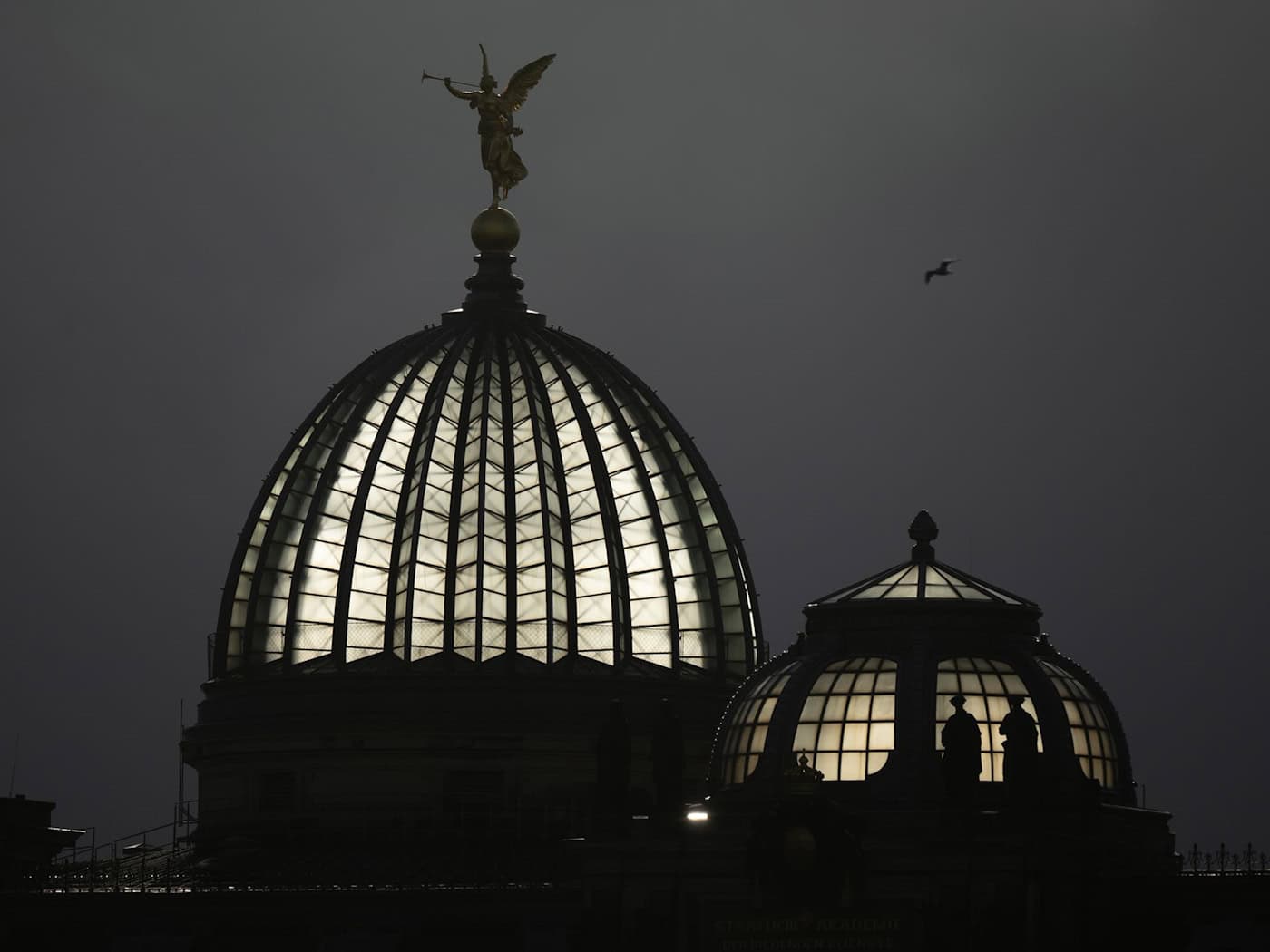
The Dresden Academy of Fine Arts (HfBK) expects significant cutbacks starting next year due to budget reductions. Without a correction to the current financial trend, the university will “inevitably face an existential crisis,” the HfBK stated. While funding for personnel expenses has kept pace with wage increases, subsidies for operational expenses and investments have remained virtually unchanged since the 2010s despite significant inflation, the university said. This has widened the gap between revenue and expenses. “Initially, the university had taken advantage of opportunities to cut costs on material expenses, but at the expense of its infrastructure. However, cuts in this area alone will no longer be sufficient to close the funding gap in the future,” said university spokesperson Andrea Weippert. The university had informed students and staff about the situation the previous week. “We are no longer talking about cuts that can be offset by additional efforts or organizational adjustments. We are facing structural challenges that would fundamentally change academic operations,” said Rector Oliver Kossack. “While we still ended 2024 with a positive result, the university had to report a loss of nearly 300,000 euros as early as 2025. The budget plan for 2027 and 2028 projects a loss of 482,400 euros for the coming year and 530,300 euros for 2028,” Weippert clarified. Although the university could still cover these deficits in the next two years using its reserves, no reserves would remain available as early as 2029. “Therefore, we are forced to cut personnel expenses, and this has a direct impact on student support as well as the quality of teaching, artistic practice, and research,” the spokesperson explained. Even though the university has been very successful in securing third-party funding so far, the economic situation and the deficits in public budgets are also being felt in this area. “The budgetary situation we have described exists in a similar form at other universities in Saxony. We are therefore concerned about Saxony’s higher education landscape as a whole. The austerity measures at universities today represent a burden for future generations,” the statement concluded. According to the university, intensive efforts are now underway to find solutions in collaboration with the Ministry of Science. “We are open to consolidation measures that make sense in terms of content and structure, where these are justifiable,” the rector emphasized. After presenting the government’s draft for the 2027/2028 biennial budget, Science Minister Sebastian Gemkow (CDU) emphasized: “Even if funds are tight, we can maintain our diverse scientific landscape—including universities and research institutions—and strengthen key areas.” Copyright 2026, dpa (www.dpa.de). All rights reservedThe funding gap can no longer be closed in the future
University Reports Losses
Forced to Cut Personnel Expenses
Concerns About Saxony’s Higher Education Landscape


