

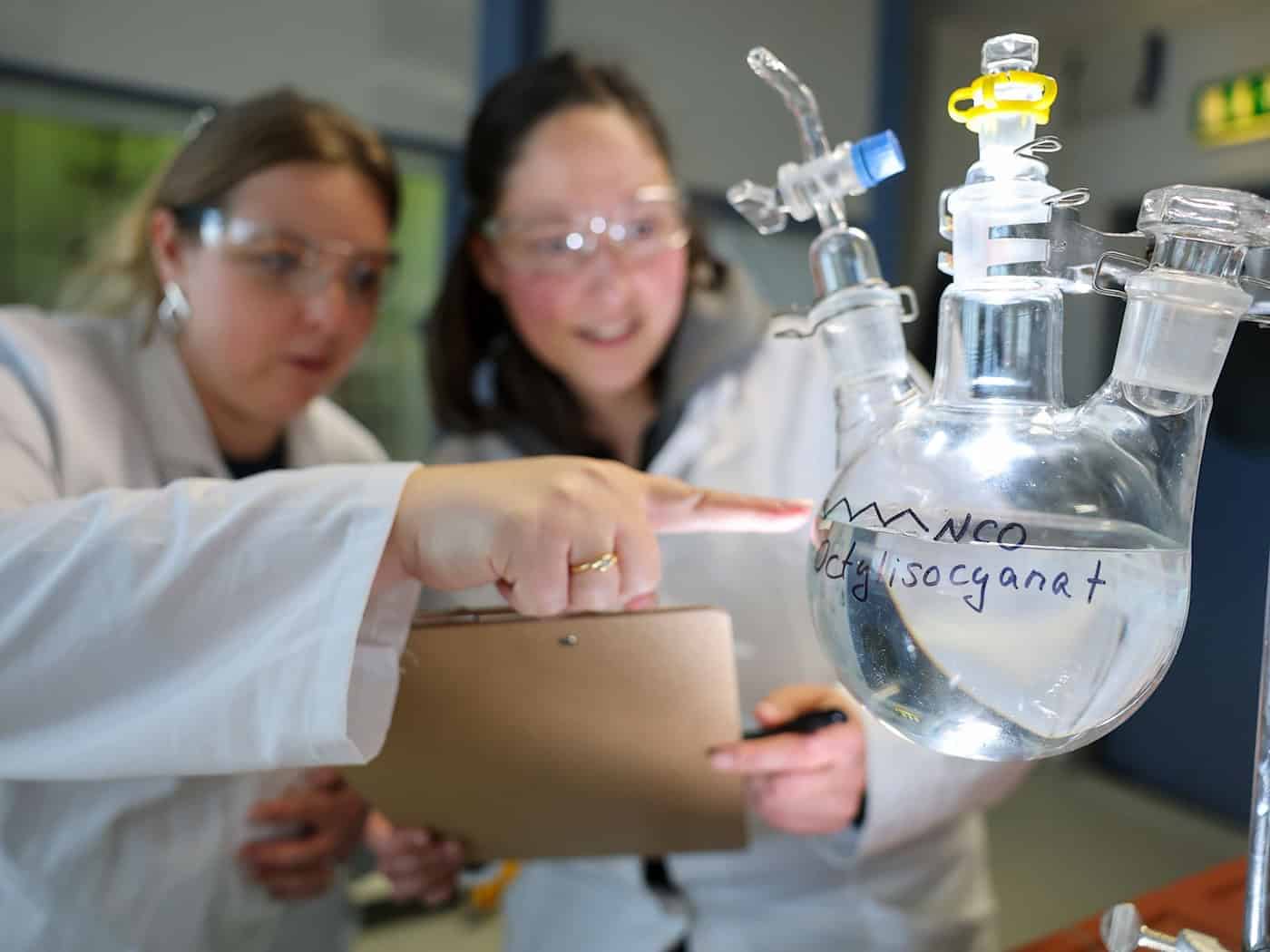
According to experts, the East German chemical industry needs new approaches in order to survive in the long term. "The transformation will come," Peter Seeberger, Scientific Director of the Center for the Transformation of Chemistry (CTC), told Deutsche Presse-Agentur. The decisive factor is whether it takes place in Germany - or elsewhere. At the CTC in Leipzig, around 60 employees are currently working on new processes for more resource-efficient chemistry, such as recycling solutions or substitutes for problematic chemicals. By 2038, around 1,000 people are expected to be employed at the planned sites in Merseburg and Delitzsch. From a research perspective, successful start-ups are also important for the transformation of the industry. One example is the young company Cynio in the Bitterfeld-Wolfen Chemical Park. It produces isocyanates - chemical building blocks for coatings, for example - using an alternative process without the highly toxic gas phosgene. Instead, carbon dioxide is used, which is produced in industry and can be reused. The aim is to make production more flexible and to be able to manufacture smaller quantities economically. Cynio focuses on niche markets that are often not served by large chemical companies. The company, which was founded in 2025, was only awarded the Saxony-Anhalt Business Prize on Wednesday. The industry is particularly important in Saxony-Anhalt, with the large chemical sites in Leuna and Bitterfeld-Wolfen. According to the Ministry of Economic Affairs, its share of total manufacturing turnover in the first half of 2025 was just under 20 percent. Copyright 2026, dpa (www.dpa.de). All rights reservedSuccessful start-ups help to transform the industry
Chemical industry particularly important in Saxony-Anhalt


