

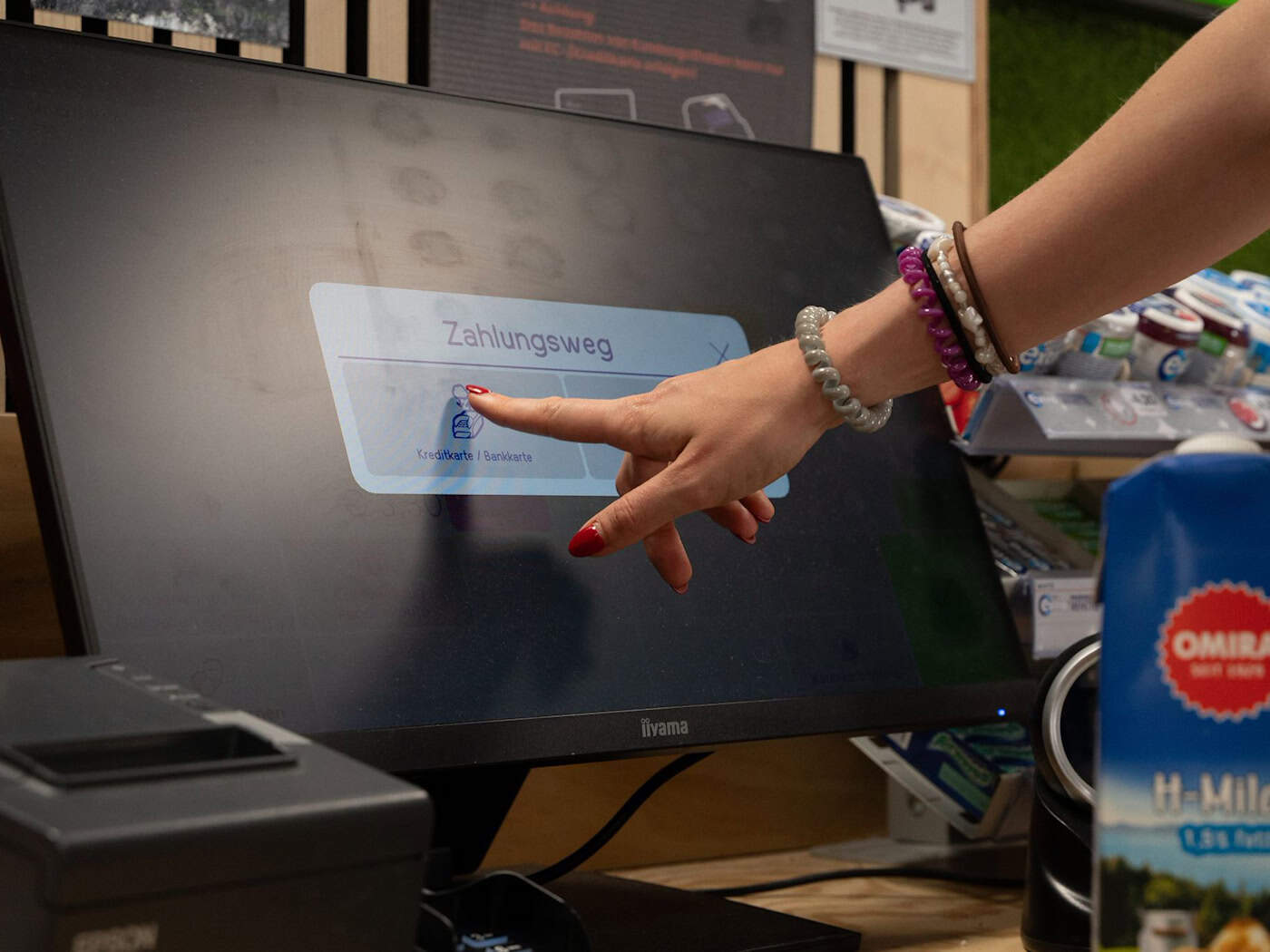
In future, a screen will greet shoppers in the spa town of Oybin instead of Aunt Emma: This Thursday, a "Smart Store" will open its doors in the small community in the Zittau Mountains - from 5.00 a.m. to 11.00 p.m. and also on Sundays and public holidays. For the 1,600 inhabitants of the popular tourist town, this closes a gap in the local supply that many have felt for years. "We've seen that people keep asking: Where can I buy something when I go hiking or want to stock up for my vacation apartment?" says operator Conrad Siebert, who runs a hotel in the village and has been a member of the local council since 2009. For him, the store has long since become an "affair of the heart". It is doubly important for the spa town: "For the residents, who don't want to drive five kilometers to the nearest supermarket every time, and for the many vacation guests who cater for themselves," says Siebert. Support is provided by the municipality, in whose building the market, which is part of the "Tante M" franchise system, is housed. On 58 square meters, there are shelves with food, drinks and everyday necessities. "It's just a normal grocery store as you know it, just a little more streamlined," says Siebert, describing the concept. Customers can gain access with a debit, credit or customer card. Payment is only made digitally at self-service checkouts and purchases are recorded electronically. In the event of theft, customers can be identified using their access data. However, it's not possible to operate entirely without people: "From Monday to Friday from 9 a.m. to 11 a.m., we're on site," says Siebert. A mini-jobber then helps with questions about problems with self-service shopping and takes care of cleaning and receiving goods. Siebert and his family do the rest themselves. The project has also caught the attention of the state government: The Oybin store is one of the winners of the "simul⁺" creative competition, with which Saxony honors innovative ideas for rural areas. Infrastructure Minister Regina Kraushaar (CDU), who officially opened the store on Thursday, called the project a "beacon for local supply in rural areas". The concept of 24-hour stores could close a gap in the local supply in Saxony's villages in the future, especially for those who are not independently mobile, increase the quality of life locally and strengthen the village community, the ministry said in response to an inquiry. Retail experts see a nationwide trend in partially and fully automated 24-hour markets. According to a survey conducted by the Baden-Württemberg Cooperative State University (DHBW) last year, there were 723 smart stores nationwide, with 13 in Saxony to date. Around 30 percent of sales are made on Sundays - without Sunday openings, the operation of many stores would not be worthwhile. As normal as shopping in 24-hour stores like the new Oybiner Markt may seem, it is still a legal grey area in Saxony. The Saxon Shop Opening Act stipulates opening hours from 6 a.m. to 10 p.m. on weekdays and sets strict limits for Sundays; there is no explicit exception for fully automated grocery stores. The Dresden Ministry of Economic Affairs described the current practice as a "temporary transitional solution" when asked by dpa. 24-hour stores like the one in Oybin would be permitted "on the basis of established administrative practice, in accordance with the requirements of commercial vending law" under certain conditions. Specifically, this means a maximum sales area of no more than 100 square meters, no sales staff and a limited product range. In order to create legal certainty, Saxony's Shop Opening Act will also regulate the operation of new concepts such as smart stores in future, the Ministry of Economic Affairs also announced. How exactly the future paragraphs could look is currently being coordinated within the state government. The franchise chain "Tante Enso" specializes in village markets that are run by cooperatives and remain accessible to customers outside of regular opening hours without staff. There are already three "Tante Enso" markets in Saxony. For company spokeswoman Jessica Renziehausen, the role model is clear. "We very much hope that the Free State of Saxony will follow the regulation in Saxony-Anhalt." There, rules have been defined for the new store concepts by decree of the Ministry of Economic Affairs. Among other things, fully automated stores in Saxony's neighboring state may only be entered on Sundays and public holidays with a customer card. In addition, no staff may be on site - not even to replenish shelves. Similar rules are also provided for in a draft law in Thuringia, which the state government recently presented. The future will now have to show how much people in Oybin will use their new shopping opportunity. Operator Siebert is optimistic: even before the official opening, people were already ringing the doorbell and asking if they could shop. In the future, the range of local amenities in the spa town will be better than it has been for years. Copyright 2026, dpa (www.dpa.de). All rights reservedAward from the Free State - and unanswered questions
Grey area in Saxony's store opening law
New legal regulation planned


