

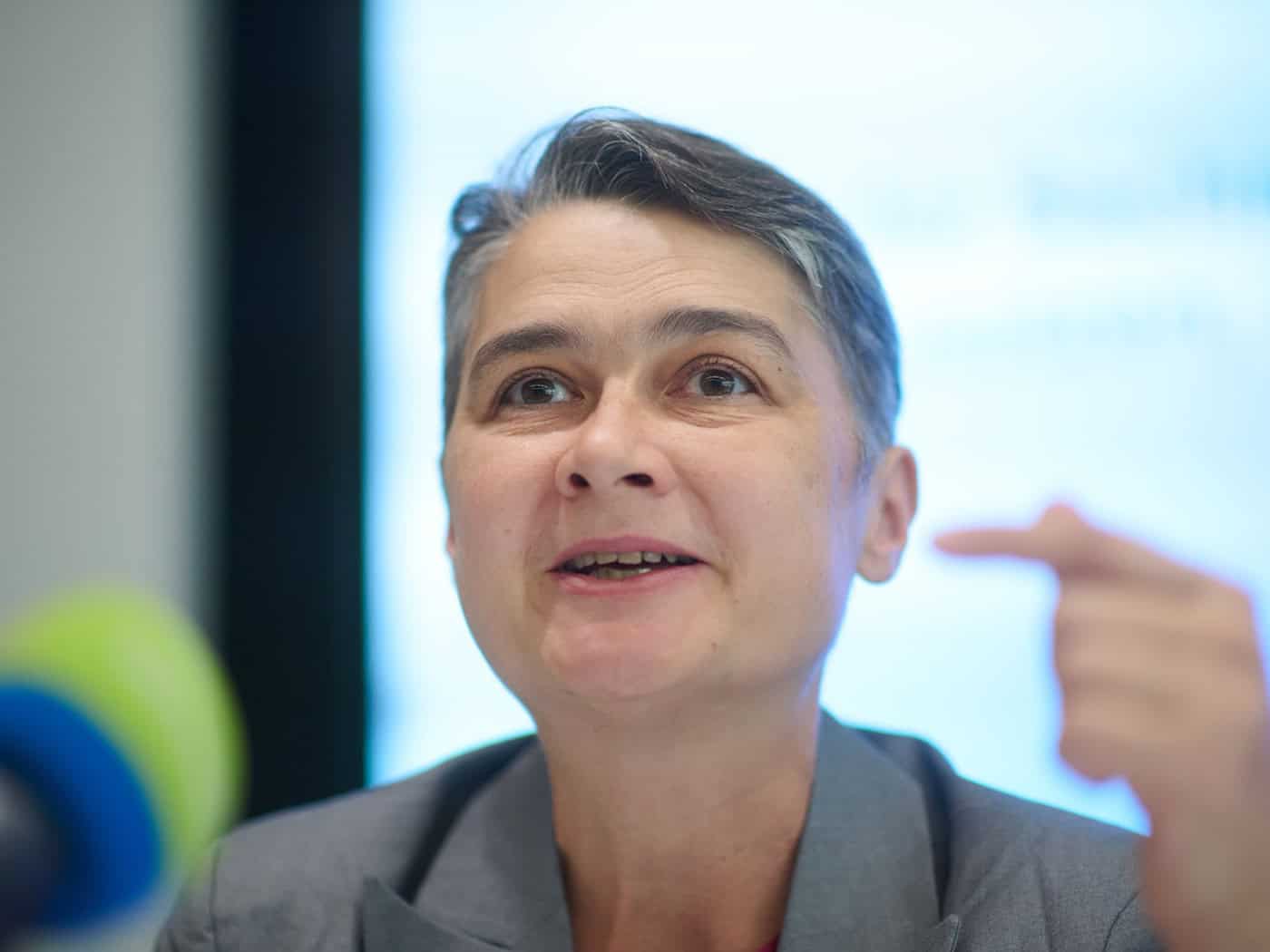
The German Trade Union Federation (DGB) will not stand idly by while the welfare state is under attack. “We need social justice and security, not further cuts to social programs,” said Daniela Kolbe, chair of the Saxony DGB, to the German Press Agency. Society is undergoing a transformation. “In this transformation, a sound industrial policy and social protection for workers are equally necessary.” According to Kolbe, the idea of longer work hours while wages and social benefits remain the same or even decrease is far removed from the realities of life. Labor costs are only one side of the coin. The German economy has run into difficulties due to global crises and overcapacity. This is also because “China acts the way it does, and U.S. President Donald Trump acts the way he does.” All of this cannot be carried out at the expense of local workers, Kolbe said. People are ready for change. This is evident not least in the workforce at VW in Zwickau. “They took the lead and said, ‘We’re taking the risk; we’re moving into e-mobility here.’” That is why they deserve the government’s support—not a management team that pits individual plants against one another. “Employees need to feel that they’re being considered in the transformation. They mustn’t be left with the impression that, in the end, they’re the fools who are just too lazy and too expensive,” Kolbe warned. Many are worried about their jobs because of the crises and structural change. “Politics must not be conducted from behind a desk right now. It must put itself in the shoes of people who shudder every time they fill up their cars and worry about making ends meet.” Kolbe sees the federal government—and his own party, the SPD—as having a particular responsibility. “It’s clear that policymakers must take action; otherwise, long-term care insurance will either go bankrupt relatively soon, or we’ll have to pay higher premiums.” The federal government’s current pension plans would undermine people’s sense of fairness, especially in eastern Germany. “I expect the SPD to stand its ground on this.” Furthermore, efforts must be made to ensure that more people in eastern Germany also benefit from company pensions. It is perfectly clear that entire industries are currently facing difficulties, Kolbe said. In the chemical, steel, and automotive industries, “the pressure is mounting.” “But we’re also seeing that there are companies that view this crisis atmosphere as the perfect time to relocate production and cut staff.” She cited the pharmaceutical company GlaxoSmithKline in Dresden as an example: “I find that disgraceful. You can’t treat people that way.” To get the situation back under control, Kolbe argued, a sensible industrial policy is needed. For instance, she said, the industry must be able to plan with stable energy prices over the long term. Putting pressure on employees is completely counterproductive. “They’re already facing challenges. To then tell them they’re too lazy is downright absurd. That only leads to uncertainty.” The consequences of this can also be seen in the most recent state elections, Kolbe emphasized, pointing to the successes of the AfD, several of whose state chapters have been classified as far-right extremist by the Office for the Protection of the Constitution. “It pains me that so many people who describe themselves as working-class have voted for far-right parties. If you take a closer look, you’ll see that, in addition to immigration, they’re also concerned with issues like pensions, healthcare, wages, and the cost of living.” “In many cases, the social issue lies at the root of the division in society,” Kolbe is convinced. Democracy and social justice are very closely intertwined. “If the centrist democratic parties want to regain relevance, they must put the issue of social justice at the very forefront. That would be a good first step.” Despite all the problems, Kolbe wants to remain optimistic: “Of course, there is a great need for reform. But in many areas, we can also be proud of what we’ve achieved—including as labor unions. That’s why we defend it. It’s worth fighting for because improvements are possible. We’re a wealthy country; we can make this happen.” That’s why the parties should once again focus more on developing visions of a positive future. “That would be something many people are probably waiting for.” This Saturday, the unions are holding rallies in 15 major cities across Germany under the slogan “Hard-earned! Your work. Your health. Your pension.” In Saxony, Leipzig will be the venue. Copyright 2026, dpa (www.dpa.de). All rights reservedDGB Rejects Calls for Longer Work Hours
Many people are currently worried about their jobs
In some industries, “the pressure is mounting”
Election Results Are a Consequence of Uncertainty
Parties should develop positive visions again


