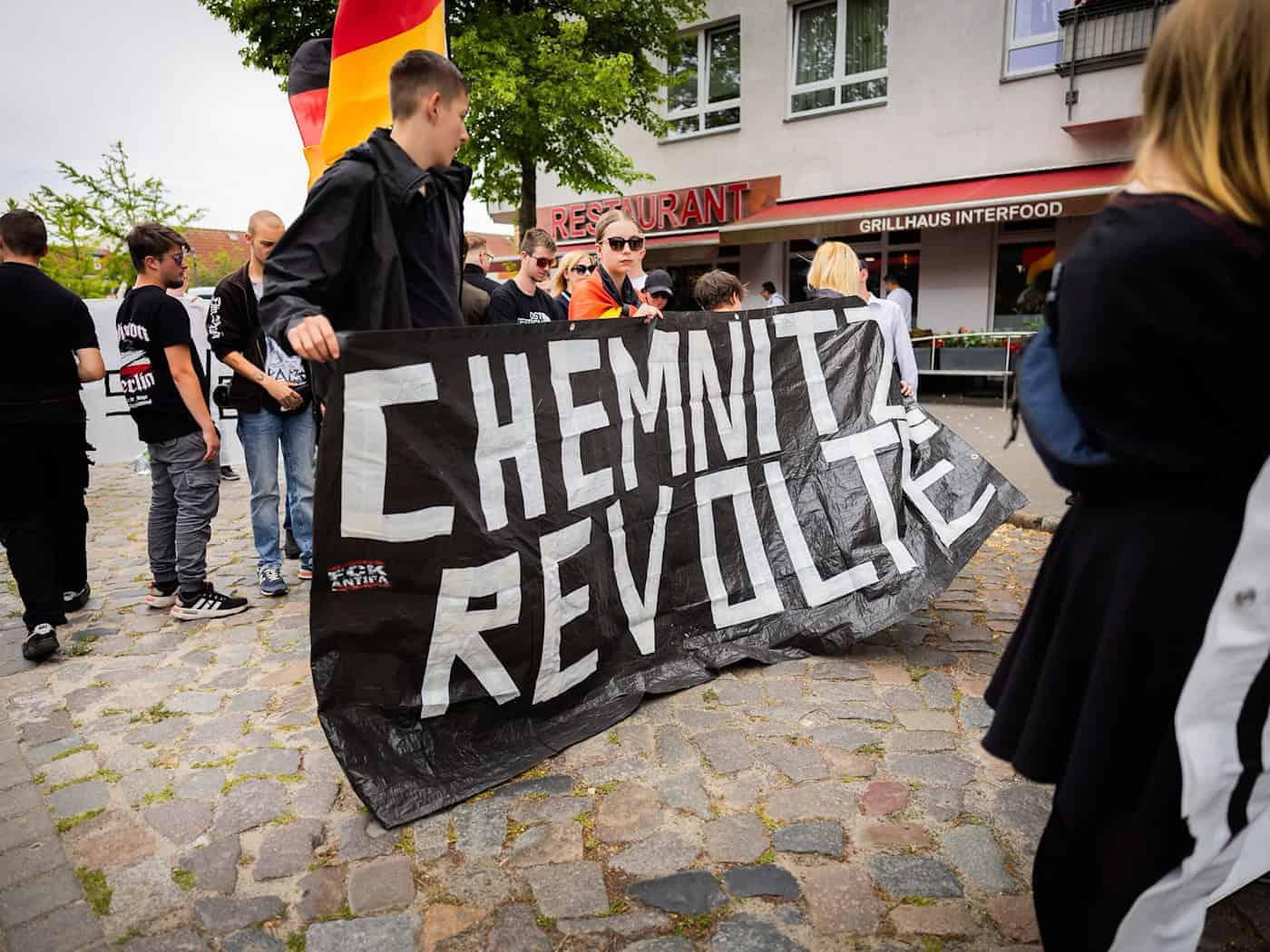
The far-right group "Chemnitz Revolt" remains in the sights of the security authorities. The Ministry of the Interior announced in its response to a minor question from Juliane Nagel (Left Party), a member of the state parliament, that it has not been possible to prove its continued existence. "New, additional findings justify the reopening of investigations in all cases," it said, however. In the first half of 2025, there had also been "discussions" about a possible ban on the association with regard to the "Chemnitz Revolt".


In the previous year alone, 16 crimes were attributed to the group
"Meanwhile, an investigation team at the Chemnitz police is looking into an extensive series of crimes associated with the group," emphasized the MP. Last year alone, 16 crimes were attributed to the "Chemnitz Revolt", including several violent attacks in Chemnitz. There is also a suspicion of the "formation of armed groups" under Section 128 of the German Criminal Code. The group had advertised online for "combat-experienced" members. "Just a few weeks later, the group went underground - perhaps just for appearances," explained Nagel.
A little over a year ago, Nagel asked the authorities for their initial findings on the "Chemnitz Revolt". At the time, the Ministry of the Interior assumed that it was an informal association of young people and adolescents. According to this, the group was active from the summer of 2024 and recruited a potential number of people "in the mid double-digit range" within a short period of time, as was reported. The group also made a name for itself through its involvement in anti-queer protests against Christopher Street Day events.