

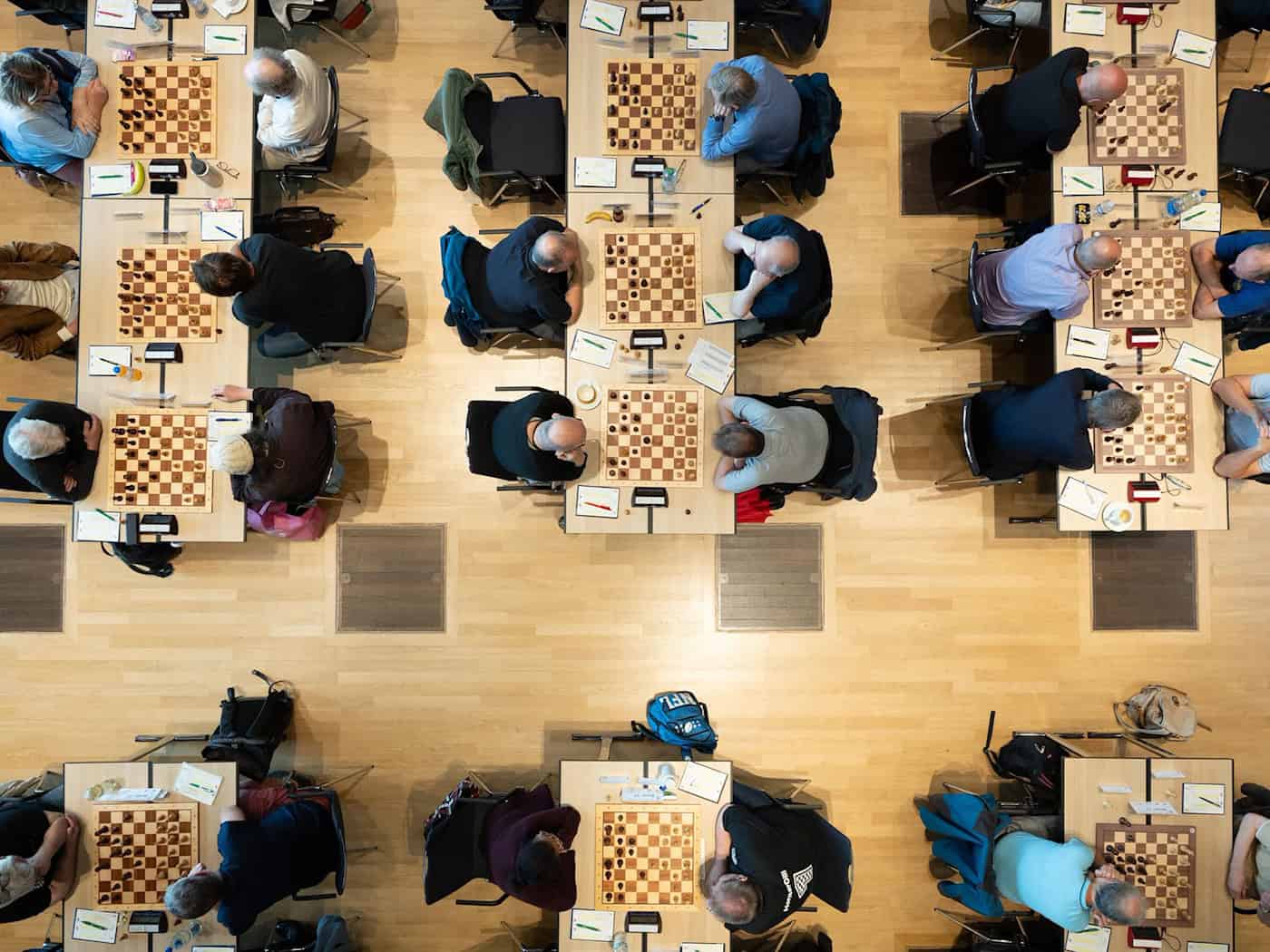
Germany is experiencing a chess boom—and is also growing stronger on the international stage. “Our membership numbers are growing at an excellent rate. We’re about to surpass the 100,000 mark,” says Paul Meyer-Dunker, who has been the new president of the German Chess Federation since May, to the German Press Agency in Dresden. The city on the Elbe is currently hosting the German Chess Summit with around 1,000 players. There are around 2,300 chess clubs nationwide. We’ve not only been able to make up for the dip during the COVID-19 pandemic but have also managed to build on that significantly, emphasizes the volunteer president, who works, among other things, as a research assistant for a member of the Bundestag. “Especially among children and youth, we’re seeing membership numbers rise sharply. We definitely don’t have any problems with the next generation. We don’t need to worry about that.” According to Meyer-Dunker, there are clubs in cities like Berlin that are currently unable to accept any more members due to the rush of interest. “Chess is played by a great many people.” In addition to club members, there are millions more who play online. “The fascination may be different for everyone. For me, it’s a wonderful form of competitive sport. You can immerse yourself in a mental challenge and compete intellectually with someone—sometimes for several hours at a time.” According to the president, Germany is stronger than it has been in a long time, even at the top level of national teams. With Vincent Keymer from Saulheim in Rhineland-Palatinate, they have a chess player who ranks among the world’s best. And Matthias Blübaum from Lemgo in North Rhine-Westphalia, as a two-time European champion, has now competed in one of the Candidates Tournaments to determine the challenger to the reigning world champion, Dommaraju Gukesh of India. “We have a national team in which everyone is ranked in the world’s top 100. This is a team that has a chance to compete for a medal at the Chess Olympiad in Uzbekistan this September,” says Meyer-Dunker. Among the women, too, there are two top-level players: Elisabeth Pähtz, a native of Erfurt, and Dinara Wagner, who moved to Heidelberg. The German women’s team won a bronze medal—their first ever—at the European Team Championship. However, Meyer-Dunker sees room for improvement, particularly among women, as 90 percent of the members of the German Chess Federation are men. The highest proportion of girls—about one-third—is found in the under-6, under-7, and under-8 age groups; among older players, the numbers drop sharply again. For this reason, the federation is considering providing special support for young girls in chess in the future. According to the president, the Chess Federation’s financial situation is solid. Membership dues alone bring in around one million euros per year. The federation can also rely on sponsors. The total annual budget is approximately 2.4 million euros. Nevertheless, the federation has not fully tapped into its potential in the past. “We sometimes make ourselves seem smaller than we are. We should project our self-confidence more strongly to the outside world.” “We’re now setting out to change exactly that,” said Meyer-Dunker, referring to the Chess Summit. The goal is to open up as a partner to the business community and other formats geared toward audiences. As an example, he cited the collaboration with chess influencers and content creators in this field. At the Chess Summit, for instance, games are commentated on via livestream. This helps reach a broad audience. The president is pleased with the positive response: “We’re seeing membership growth, have greater financial resources, our players are rising to the top of the world rankings, and our teams are capable of competing with any team in the world.” Now the federation is embarking on a new phase so that it, too, can keep pace with these developments. In 2027, the 150th anniversary of the German Chess Federation will be celebrated in style. Copyright 2026, dpa (www.dpa.de). All rights reservedNo Concerns About the Next Generation in Chess
The Fascination of Chess
Germany Also Successful on the International Chessboard
A medal at the Chess Olympiad in Uzbekistan?
Still too few women active in clubs
“We sometimes make ourselves seem smaller than we are”
Chess Federation Aims to Be More Visible in the Future
The Chess Federation will celebrate its 150th anniversary next year


