

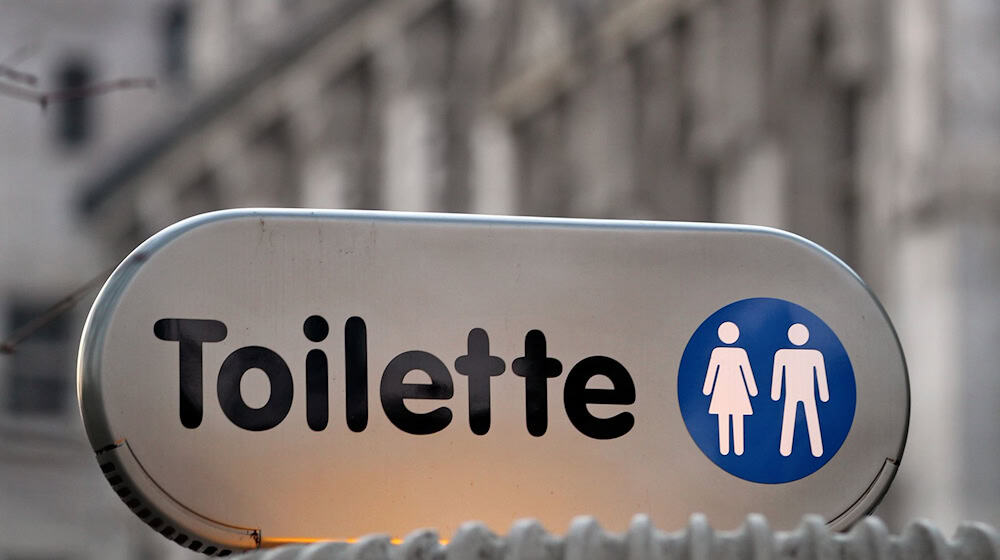
In larger cities, it is usually not a problem to find a public "quiet place" when your bladder pinches. Whether the toilet is clean and functional, however, is another matter. Many cities in Saxony and Saxony-Anhalt are fighting against vandalism and soiling - and pay tens of thousands of euros every year. This is the case in Magdeburg, for example. "Recurring challenges and difficulties in connection with public toilets are the regular defacement with graffiti and vandalism," said Magdeburg city spokesperson Michael Reif when asked. However, graffiti and vandalism are not the only problems, he added. The toilets are also frequently blocked - for example when hygiene products are disposed of in them. Sand is also often found in the pools at facilities near a playground. According to Reif, there are currently 17 toilet facilities in the state capital of Saxony-Anhalt. An eighteenth has been demolished and is to be rebuilt. According to the information, operating the facilities costs the city 414,000 euros per year. According to the city, Dessau-Roßlau has decided to no longer operate public toilets due to vandalism. "The need for repairs is too high," said a city spokesperson. There are still plenty of opportunities for people who are out and about in the city to relieve themselves - for example in restaurants or other catering establishments. According to the city, there are around 85 public toilets in the Saxon state capital - either in municipal hands or run by private operators. The operation costs around 390,000 euros per year. This year, additional costs of more than 10,000 euros were incurred due to vandalism and graffiti. Last year, however, it was only around 1,000 euros. The range of toilets in Dresden is supplemented by the so-called "Nette Toilette" in Neustadt, i.e. cafés and restaurants whose toilets can be used free of charge. According to the city, they receive a "small expense allowance" in return. A similar concept already exists in some cities in Thuringia. Unisex facilities are also to be built in Dresden next year, explained city spokeswoman Diana Petters. In Halle, there is an online overview where you can find the ten public toilets, said city spokesperson Drago Bock. Nine of the ten facilities are barrier-free, he added. While the maintenance of the toilets in Halle costs 110,000 euros a year, the cost of cleaning them is almost as high at 80,000 euros, explained Bock. "The damage caused by vandalism is considerable in some cases, incurs high costs and restricts availability," he said. In neighboring Leipzig in Saxony, there are a total of 20 free-standing toilet facilities in public spaces that are open around the clock and operated by the city, explained spokeswoman Franziska Schneider. In addition, there are more than 30 publicly accessible sanitary facilities in municipal institutions such as citizens' offices or libraries. The operation of the 20 free-standing toilet facilities costs 685,000 euros per year - including repair work. There are cases of vandalism every day. Recently, anti-constitutional symbols and right-wing extremist slogans have been found with increasing frequency. Copyright 2025, dpa (www.dpa.de). All rights reservedCosts for repairs fluctuate
Anti-constitutional symbols and far-right slogans


