

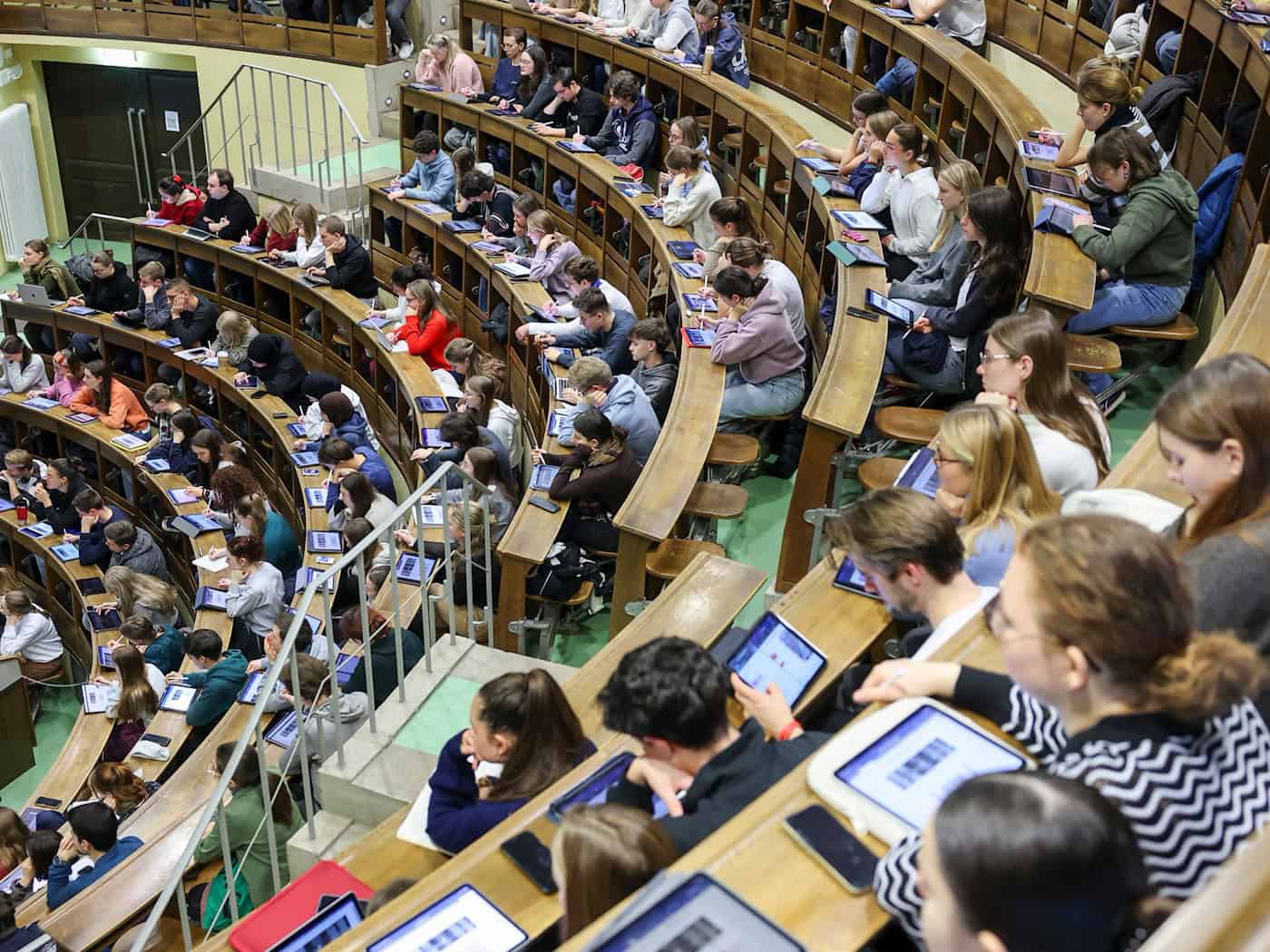
Most students in Saxony who earn their high school diploma go on to study in the state. Last winter semester, 67 percent of these first-year students began their studies at a university in the Free State of Saxony. The Federal Statistical Office announced this at the start of the new winter semester. Saxony thus lies slightly below the national average: Nationwide, 69 percent began their studies in the state where they had earned the qualification required for higher education—usually the Abitur or Fachabitur. Other first-year students chose Thuringia (6.7 percent) and Saxony-Anhalt (6.1 percent). The remaining federal states each accounted for less than five percent. The trend of first-year students often remaining in the federal state where they earned their university entrance qualification is evident nationwide. In Saxony, this was true for 66.8 percent of first-semester students in the 2025–2026 winter semester. Another 6.0 percent came from Thuringia to study in Saxony, 5.5 percent from Saxony-Anhalt, and 4.9 percent from Brandenburg. Young people from other federal states were also drawn to Saxony, though the figures in each case were below five percent. According to statisticians, the more diverse the range of degree programs within a federal state, the more young people stay there to study. In the populous state of North Rhine-Westphalia, with its many university locations, this proportion is particularly high at 82 percent. In Brandenburg, by contrast, it stood at only 33 percent. Nearly as many first-year students from Brandenburg with a university entrance qualification went to Berlin to study (32 percent). The analysis considers only first-year students who obtained their university entrance qualification in Germany. Copyright 2026, dpa (www.dpa.de). All rights reservedMost Students at Saxony’s Universities Are From Saxony
Range of degree programs as a reason to stay


