

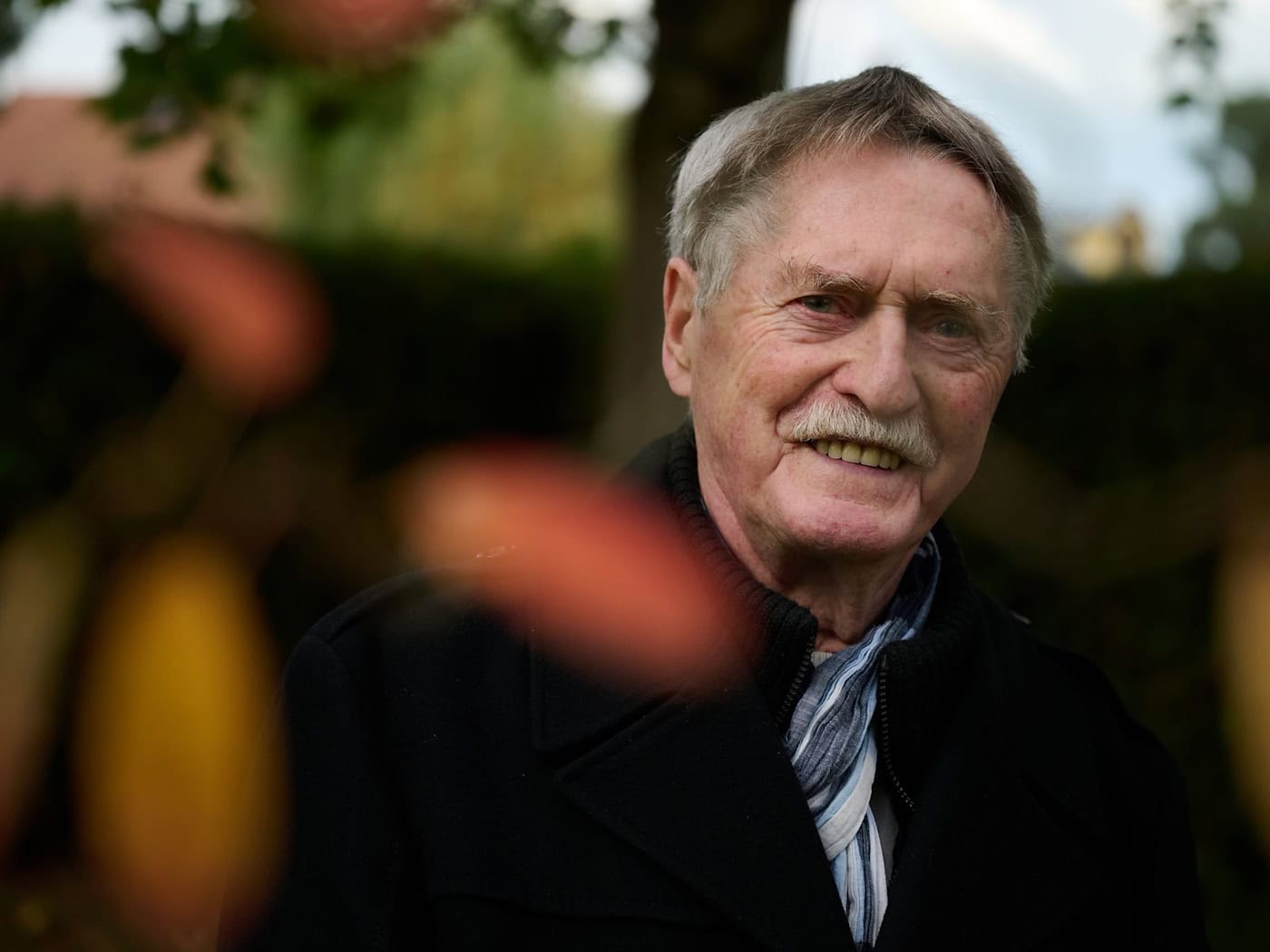
On October 22, 1946, at 6:00 a.m., two men knocked on the door of an apartment in Halle an der Saale. A Russian captain and a soldier carrying a weapon informed the family living there: “Pursuant to Order No. 228, you are to be transported to the USSR. I cannot tell you where at this time. I’ll be back at noon, and you can take whatever you’ve managed to pack by then.” The mother then had the family’s cupboards, containing all their household goods, nailed shut and loaded onto the truck parked in front of the house. At 12:00 p.m., the couple and their three sons are taken to the train station in Halle, where they board a train. At that point, they do not know where they are headed. This is how Konrad Eulitz’s mother recounted the events of that time. Eulitz’s family was one of many taken to the Soviet Union that day—because the Soviets wanted to secure the expertise of specialists from the research community. Now, on Thursday, the 80th anniversary of these events, Eulitz plans to give a lecture on the subject in Dresden. According to historian Christoph Mick, who teaches at the University of Warwick, 2,300 so-called specialists were taken to the Soviet Union with their families on that day. In total, Mick estimates that around 3,000 specialists suffered this fate between 1945 and 1947. Among them were experts in nuclear physics, optics, and rocket research—and, as in the case of Eulitz’s family, in aeronautics. Eulitz’s father, as he recounts, was an aerodynamicist by profession. Mick describes this transport of specialists and their families to the Soviet Union as a “deportation” that took place against their will. Eulitz also says: “For those affected, it was an abduction.” Eulitz himself says he was two years old at the time—and the youngest child in the family—when they were taken to the USSR. He says he cannot remember that day himself. With this operation, the Soviet Union sought to secure German knowledge and research findings. Many scientists in the Soviet Occupation Zone had already been working and conducting research for the Soviet Union. Nevertheless, it was decided there to bring the specialists to the USSR, as historians Rainer Karlsch and Burghard Ciesla write in a joint essay. According to Mick, the individual Soviet industrial ministries had pushed for the relocation of the German experts. According to Ciesla, the Soviet state security service, the NKVD, carried out the operation. Ciesla speculates that the American “Operation Paperclip” may have put additional pressure on the Soviets to secure the specialists’ knowledge. The Americans had already begun recruiting scientists for their own purposes in early 1946. What happened on October 22, 1946, was later also referred to as Operation Ossawakim, as Karlsch and Ciesla write. Eulitz rejects this umbrella term. He prefers to describe the events using Order 228, which specifically ordered the deportation of the aeronautical engineers. According to a publication by physicist Gerhard Barkleit in April, this order was issued by the USSR Minister of the Aviation Industry to prepare for the transport of the specialists to the USSR. In the Soviet Union, Eulitz’s family went to Podberesje—a town on the Volga River. Today, the town is called Dubna III, as Eulitz says. He cannot remember the trip there, but he remembers his time in the USSR very well. The children attended a German school there, and they would meet up with other German families to go to the theater, concerts, or dance performances. Eulitz recalls that the German families there were doing well, but the adults were not allowed to leave Podberesje without an escort. He says: “We children had a carefree, wonderful childhood there.” It wasn’t until his return trip to Germany, as he passed through Poland and then in Germany itself, that Eulitz saw destroyed cities and industry, as he recounts. In September 1950, the family was brought back to Halle. From there, after some time and a stopover in Berlin, they went on to Dresden. Here, Eulitz’s father worked at the Dresden Aircraft Works. According to the Federal Archives, the scientists were brought back in the 1950s after their knowledge had been “exhausted.” The children did not know what their father had been working on in the USSR. It was not discussed at home. “You have to understand that in the GDR, you couldn’t talk about such things,” says Eulitz. As an adult, he himself became an aeronautical engineer and worked in Dresden. As a retiree, he began giving lectures on aviation history at the Dresden Aviation Interest Group. After much deliberation, he decided, as he himself says, to finally explore the deportations of the specialists on his own. Eventually, he made the decision to give a lecture in Dresden marking the 80th anniversary of the deportation of the aviation specialists. His two grandsons, who had asked him many questions about that period, also supported him in this endeavor. “It became clear to me that subsequent generations had not learned about such postwar actions by the Soviets and Americans,” says Eulitz. Copyright 2026, dpa (www.dpa.de). All rights reservedWhy was the family taken away?
The Race for Knowledge
Part of Operation Ossawakim?
Life in the Soviet Union
Return to Germany
Coming to Terms with the Past


