

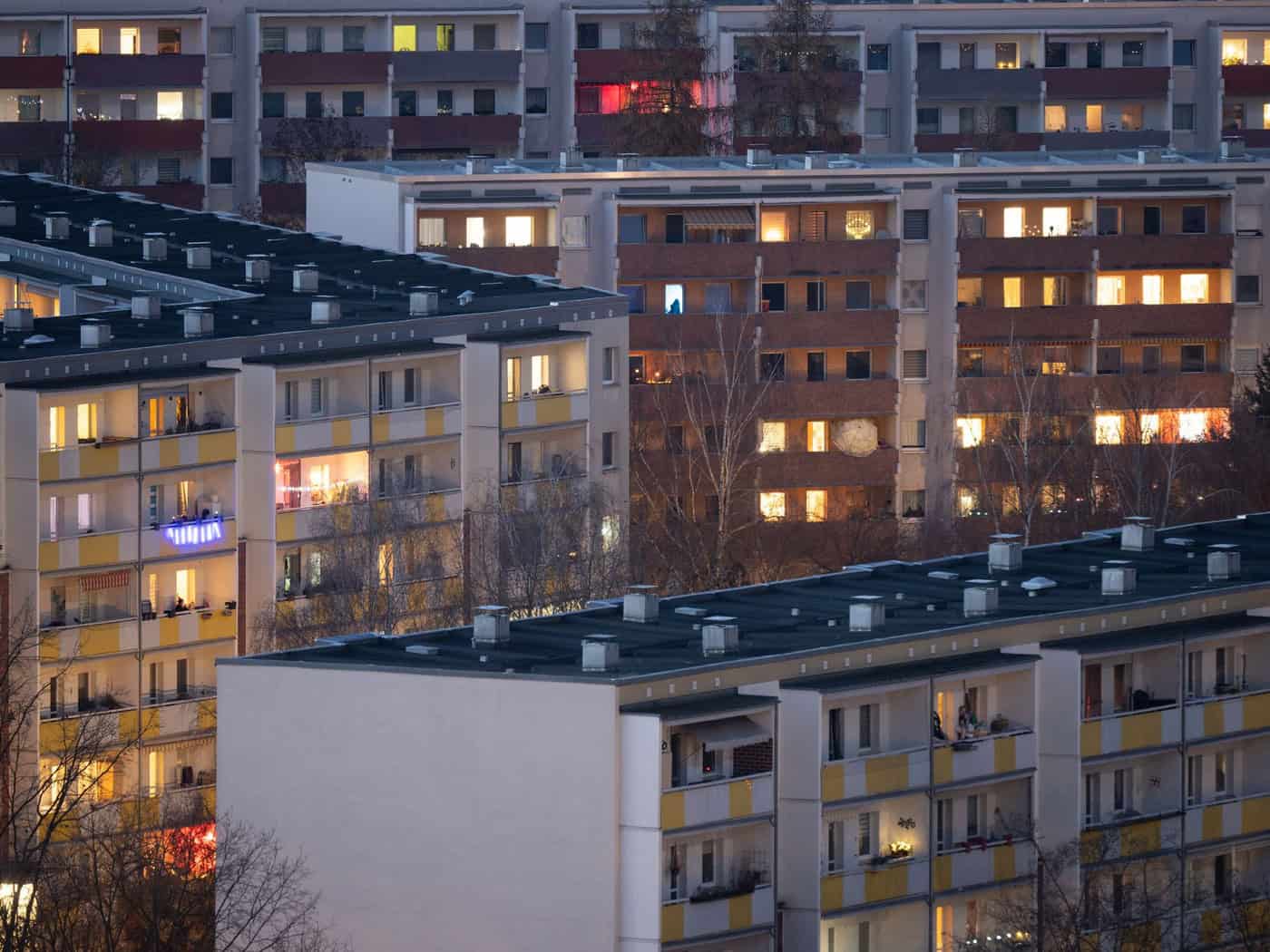
People in Saxony now have to work significantly fewer hours to pay their rent than they did a good 20 years ago. In 2024, across the 13 counties and independent cities, it took an average of about 20 minutes and 10 seconds to earn the monthly rent for one square meter of living space. In 2004, it was still just under 29 minutes and 40 seconds, according to calculations by researchers at Ifo Dresden and the Hamburg Institute of International Economics (HWWI). Extrapolated to a 70-square-meter apartment, this means about 11 fewer hours of work per month than in 2004. “Anyone who focuses solely on rising rents overlooks the fact that incomes have also risen significantly,” says Marcel Thum, director of the Ifo branch in Dresden. “The key question is whether incomes are rising faster than housing costs.” In the Erzgebirge district, the amount of work time required per square meter of living space fell from 30.6 minutes in 2004 to 17.6 minutes in 2024. This corresponds to a 42.5 percent decline. In the Vogtland district, the figure was 29.1 minutes in 2004 and 17.0 minutes in 2024—a 41.8 percent decrease. The decline was smallest in the city of Leipzig: 12.6 percent. At the same time, the labor requirement there was the highest in 2024, at 25.7 minutes per square meter. It was lowest in the Vogtland district. The calculations were based on re-leasing rents from an information system operated by Bulwiengesa, a member of the Scout24 Group. For wages, the researchers calculated net figures based on an unmarried person without children. When comparing at the district level, distortions may occur in areas with heavy commuter traffic because wages were determined based on the place of work rather than the place of residence. Copyright 2026, dpa (www.dpa.de). All rights reservedThe biggest decline in the time required was in the Erzgebirge


