loading

Nachrichten werden geladen...

Decision on the Waldschlößchenbrücke bridge stands

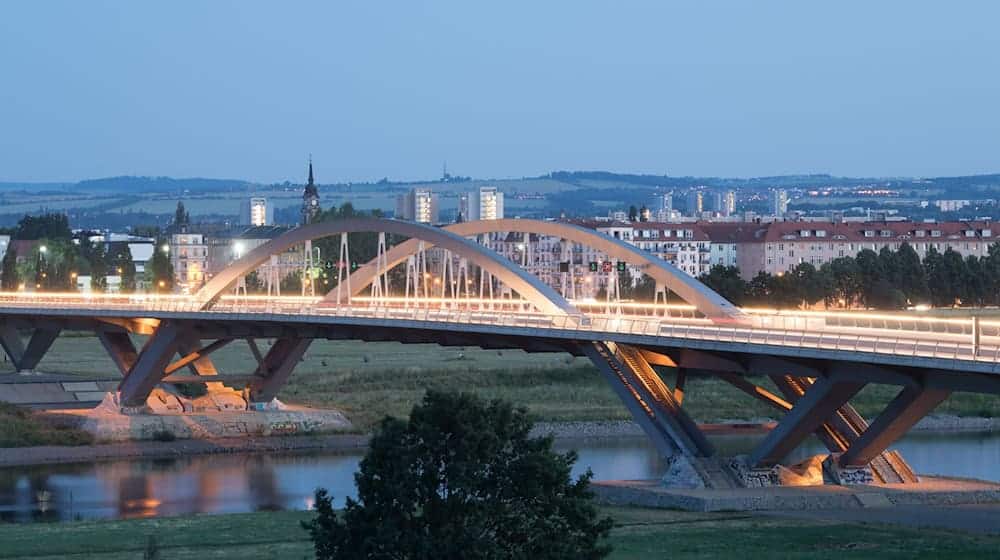
The planning approval decision for Dresden's Waldschlößchenbrücke bridge stands.(archive photo) / Photo: Sebastian Kahnert/dpa-Zentralbild/dpa

Nobody believed that Dresden's Waldschlößchenbrücke bridge would have to disappear again due to a lack of conditions. What conservationists criticize.

The legality of Dresden's once controversial Waldschlößchenbrücke bridge has been confirmed once again. As announced by the State Directorate of Saxony (LDS), the so-called planning approval decision to approve the bridge has been upheld. This was determined by the LDS in a supplementary procedure.

The planning approval decision approved the construction of the new bridge in 2004. Nature conservation associations filed a lawsuit against it. In 2016, the Federal Administrative Court ruled that a subsequent FFH (Fauna-Flora-Habitat) impact assessment and a species protection assessment had to be carried out. The state capital of Dresden applied for these supplementary procedures.

Bridge meets European nature conservation and species protection requirements

According to the state directorate, the compatibility of the Waldschlößchenbrücke bridge with European nature conservation requirements and species protection law was examined. As a result, it was determined that the bridge is compatible with the requirements.

Speed limit remains in place during the warmer months

The speed limit of 30 km/h that applies on the Waldschlößchenbrücke bridge at night from April to October remains in place in order to reduce the risk of collisions between vehicle traffic and the pug bat and other bat species.

Bridge construction was highly controversial at the time

The construction of the Waldschlößchenbrücke bridge, which was inaugurated in 2013, led to Unesco revoking Dresden's World Heritage title in the Elbe Valley in 2009. The construction had already led to disputes in Dresden. In a referendum, a majority voted in favor of the construction, but there was also fierce opposition from nature conservation groups. The steel and concrete bridge spans the Elbe and its floodplains over a total length of 636 meters.

In summer 2016, the Federal Administrative Court in Leipzig ruled that the controversial bridge did not have to be demolished. However, the judges declared the planning approval decision unlawful and demanded an improvement.

Copyright 2025, dpa (www.dpa.de). All rights reserved

🤖 Die Übersetzungen werden mithilfe von KI automatisiert. Wir freuen uns über Ihr Feedback und Ihre Hilfe bei der Verbesserung unseres mehrsprachigen Dienstes. Schreiben Sie uns an: language@diesachsen.com. 🤖