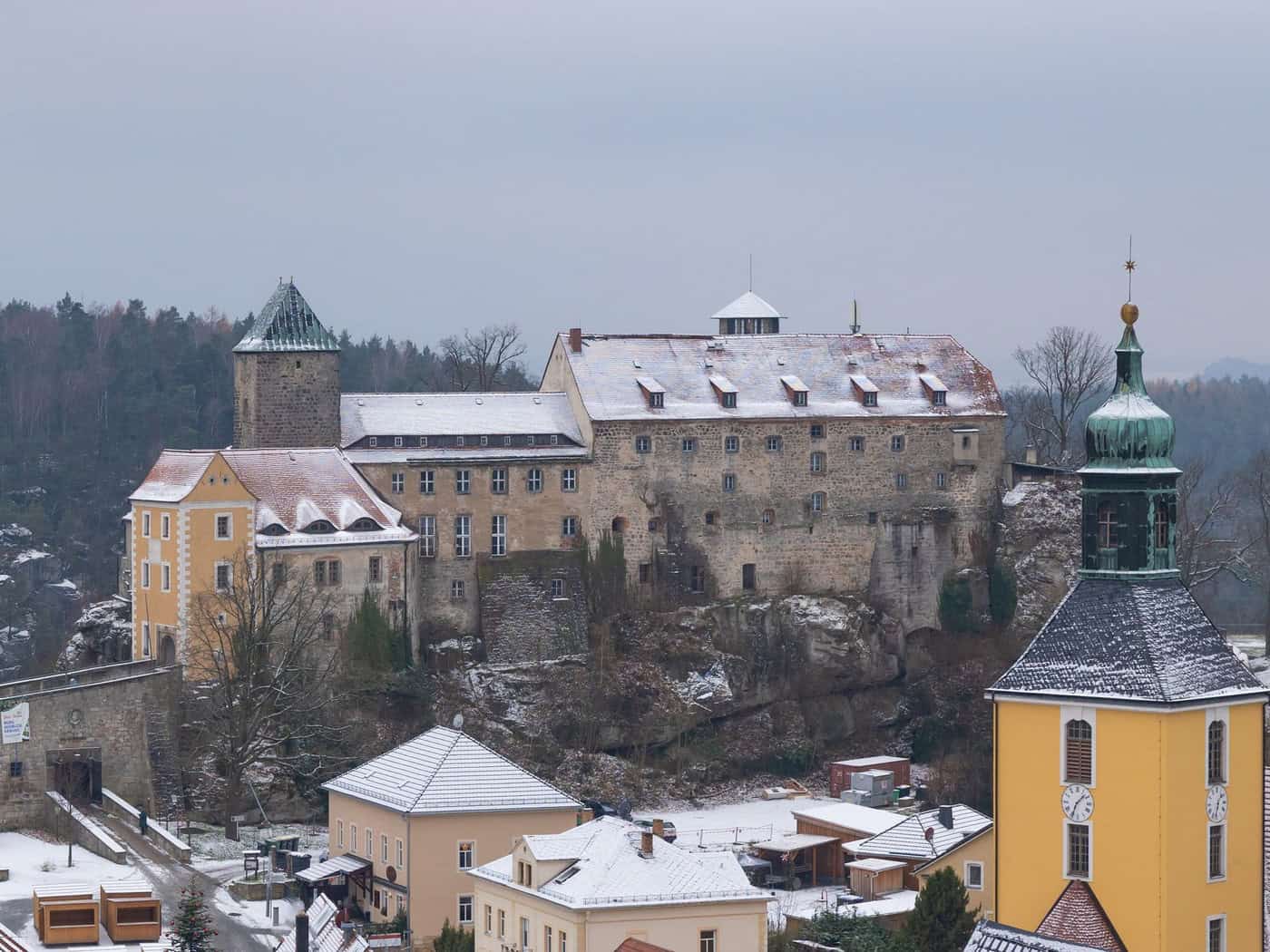
The federal government and the Free State of Saxony are providing over 29.26 million euros in funding for the restoration of Hohnstein Castle and a permanent exhibition on the castle’s history in the Saxon Switzerland-Eastern Ore Mountains district. The funding approval notices were recently presented in Hohnstein, according to a joint statement from the Federal Government Commissioner for Culture and the Media, the Saxon Ministry of Infrastructure, and the relevant district. According to the information provided, the federal government is contributing 16.26 million euros, while the Free State of Saxony is providing 13 million euros. Minister of State Wolfram Weimer stated on the occasion of the handover of the funding: “Hohnstein Castle is a reflection of our eventful history. A place that tells us what has shaped a region and reminds us of the responsibility we bear for our shared cultural heritage.” Saxony’s Minister of State for Infrastructure and Regional Development, Regina Kraushaar (CDU), added: “Hohnstein Castle has shaped the region for centuries and is today the cultural and tourist landmark on the edge of Saxon Switzerland.” That is why it is well worth the effort to ensure that the castle can continue to be a place for recreation, art, and culture in the future. According to reports, Hohnstein Castle looks back on a long history. Built in the 12th century, the castle complex became Germany’s largest youth hostel in 1926. At that time, the castle offered approximately 1,000 beds. Starting in 1933, the castle housed a concentration camp run by the Nazi regime, where approximately 5,600 prisoners were detained. In 1934, the Hohnstein concentration camp was dissolved. Later, the castle complex was used as a prisoner-of-war camp. After the end of World War II, it resumed its use as a youth hostel, which it remains to this day. Copyright 2026, dpa (www.dpa.de). All rights reservedThe castle once served as a concentration camp