

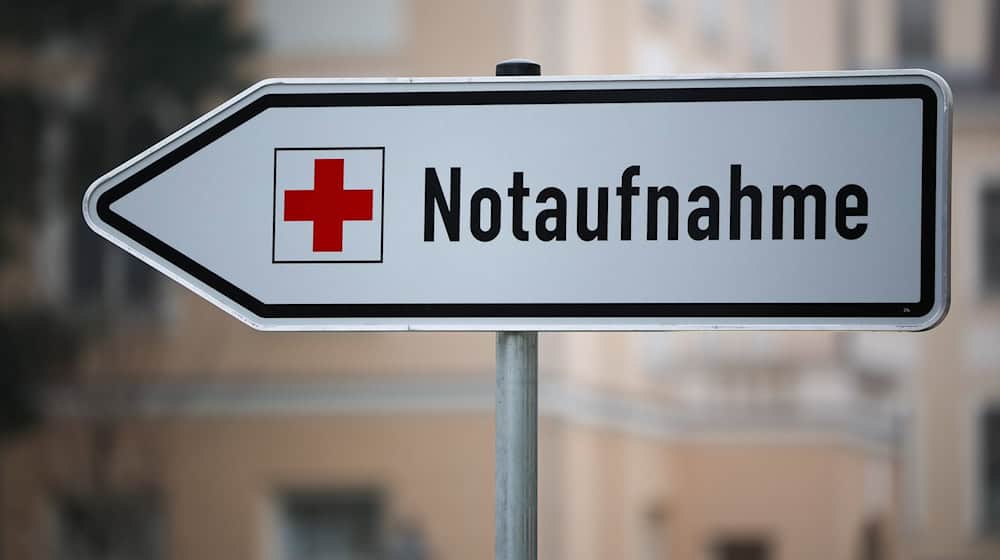
After a widespread power outage in Berlin cut off several hospitals, Saxony's hospitals are prepared for an emergency. There is sufficient emergency power capacity to maintain basic operations "for a certain time", a spokeswoman for Dresden University Hospital told the German Press Agency. The Chemnitz Hospital said that the hospitals, which are considered critical infrastructure, would have to guarantee supplies for up to 24 hours in the event of a power outage anyway. "At Chemnitz Hospital, this is done with the help of a total of eleven emergency power generators that produce electricity." The emergency outpatient department and operating theatres, intensive care units, safety lighting, elevators and fire protection systems are all supplied with power. However, it is also clear that a power outage as long as the one that occurred in Berlin this week would mean a "loss of medical services", according to a spokesperson for Dresden University Hospital. This would primarily affect planned and non-urgent treatments and operations, she added. Emergency scenarios are regularly put to the test in working groups with the authorities and energy suppliers. For new buildings, for example, additional emergency power generators are taken into account. The power outage in Berlin has also been closely monitored in Saxony's hospitals. However, the hospitals in the Free State do not see any immediate consequences for their own emergency planning. Dresden University Hospital last had to deal with an emergency in 2021. Back then, a helium balloon caused a short circuit in the Dresden-Süd substation, resulting in a widespread power outage. At times, 300,000 households in the entire supply area in Dresden were affected by outages. Which areas needed to be supplied most urgently in an emergency depended on the situation, according to the spokesperson for Dresden University Hospital. According to Chemnitz, the hospital assumes that it will be able to supply all three hospital sites with sufficient energy for the emergency supply using its own systems. Saxony's largest grid operator Mitnetz also says it regularly rehearses crisis situations - whether due to natural disasters or deliberate damage. According to press spokesman Hagen Ruhmer, the company is also aware of the increasing likelihood of politically motivated attacks. "We are keeping an eye on this diffuse threat situation and are taking countermeasures." Hacker attacks and non-ferrous metal thefts are currently the most common. The network operator also has mobile generators. Some of these have also been sent to Berlin due to the widespread power outage. The grid operator does not want to provide details on security measures. The energy supplier Eins Energie, whose subsidiary Inetz is responsible for the electricity grid in Chemnitz and parts of south-west Saxony, made a similar statement. According to a spokeswoman, the company does not want to comment on details of the grid construction and the crisis supply for security reasons. Vandalism, cyber attacks and "deliberate acts of physical sabotage" are also becoming more frequent here. However, despite high material damage, there have been no large-scale failures to date. The risks are already taken into account in the planning phase and the network is designed with the necessary redundancy to manage outages. According to the authorities, around 45,000 households and 2,200 businesses have been without power since Saturday morning due to the widespread power outage caused by an attack on a cable bridge in the Berlin district of Steglitz-Zehlendorf. A left-wing extremist group had claimed responsibility for the arson attack. The power supply to the affected area was restored on Wednesday. Copyright 2026, dpa (www.dpa.de). All rights reservedBerlin emergency has no consequences for emergency planning
Cyberattacks and damage caused by metal thieves at grid operators


