

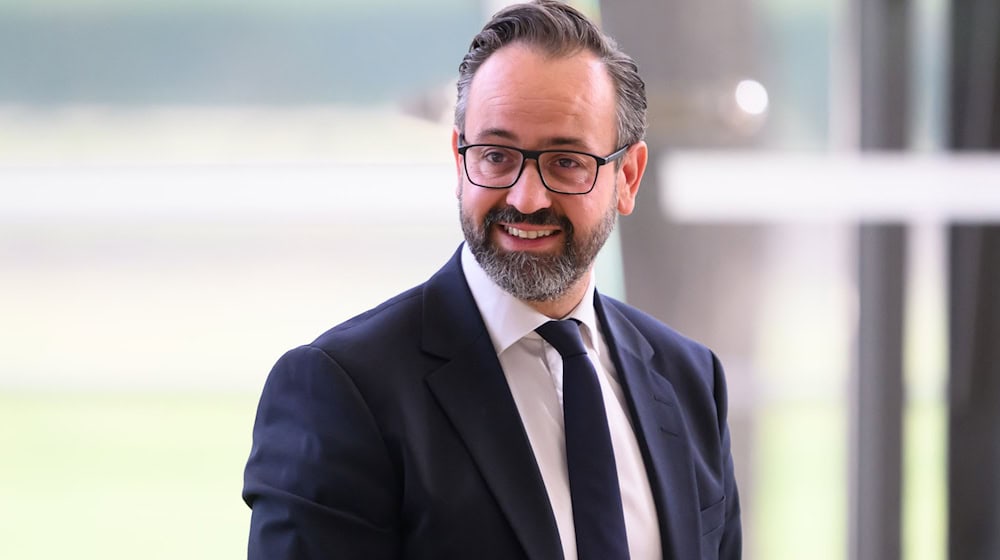
Saxon science is facing difficult times in view of the state's tight financial situation. "We are faced with the task of maintaining our broad-based scientific landscape with universities and research institutions at this level and at the same time advancing selected areas. In short: maintain structures, strengthen priorities," said Science Minister Sebastian Gemkow (CDU) in an interview with the German Press Agency. The focus is on areas such as semiconductors, materials research and biotechnology, in which Saxony already has great expertise. Gemkow envisages financing from EU, federal and state funds. This would be supplemented by third-party funds raised by the universities through research projects, as well as private investor funding. The tight financial situation is already having an impact on all institutions, he said. Nevertheless, the Saxon government is firmly convinced that it will continue to provide special support for science and research. "This is especially true in times of industrial upheaval and social transformation. We need value chains here in the state." As an example, Gemkow sees the development of the semiconductor industry in Dresden, which began in the GDR era and later, with targeted investments and settlements, made Silicon Saxony the largest chip manufacturer in Europe. However, experience shows that structures are irretrievably lost if they are neglected in financially difficult situations. "Science is the life insurance for our economic strength, our quality of life and our standard of living." According to Gemkow, Saxony's universities have comparatively good planning security. "With the grant agreement, they have a clearly agreed sum for basic funding as the strongest pillar of their resources until 2032. This cannot be taken for granted in financially strained times." In addition to this, the universities could still have access to flexible funds such as special allocations and budgets, but these are tied to specific goals. "These funds do not relate to basic funding and have often been used for ongoing operations in the past. It is unclear whether this leeway will also be available in the future." According to Gemkow, this is already leading to financial pressure at the universities. "Of course, we are all waiting with trepidation to see what the future budget will look like." According to the latest budget retreat, savings of around 2.9 billion euros have been made in Saxony's double budget. "In recent years, we have had a financial development that only knew an 'upward trend'. Now we are all facing a new situation together and have to deal with it." The universities have already dipped into their reserves for the current 2025/2026 double budget and spent available funds there. "Now it's time to get down to business." "That's the challenge. It sounds like squaring the circle. But I am optimistic and firmly convinced that we will succeed in maintaining the structures and at the same time focusing on priorities," said Gemkow: "We are in a phase in which many things are changing, some for the worse, some for the better. Balancing all of this and emerging from this crisis situation as a winner is the order of the day and at the same time the goal. Gemkow believes that a country like Germany can no longer compete in certain areas with international competitors that have better framework conditions. "But running behind will not lead us out of the crisis. In many areas, we are no longer as competitive as we used to be. But we are still among the world leaders in science. We need to maintain this, as it opens up new opportunities, developments, ideas, products and business models that no one else has yet. This gives us the chance to catch up in the economy and be at the forefront again." Copyright 2025, dpa (www.dpa.de). All rights reservedFunding is already being used
Universities have comparatively good planning security
Gemkow remains confident about the future


