

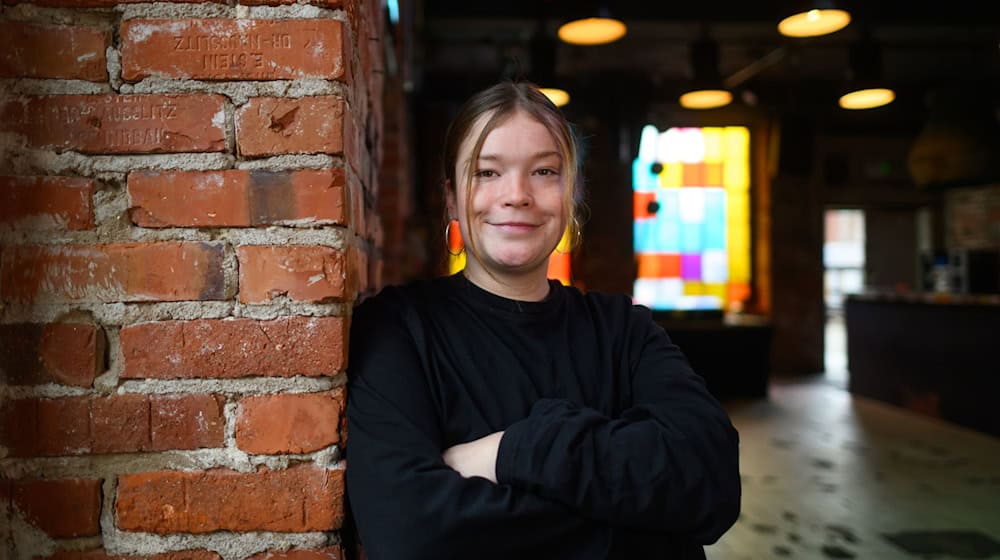
"We can't pay the wages on time every month," says Josefine Went. She is standing on the tiled floor of the Dresden techno club "objekt klein a". Sunlight streams through the colorful windows. There's no sign of the nightly raves right now. "It's a really extreme up and down," she says. Went runs OKA, as they call the club, together with Felix Buchta. 65 people are currently employed. "Of course it always hurts to say and feels very lacking in solidarity, but the rising minimum wage is also a problem for us," says the managing director. And that's not all: the high costs of rent and running the club are also a problem. "We're doing quite well out of 2025 and at the same time are already worried about 2026 again." Many clubs are feeling the same way as the OKA. Although more people are going out to party again since the coronavirus pandemic, energy, rents, fees and wages have become noticeably more expensive, says OKA Managing Director and board member of Live Initiative Sachsen (LISA), Felix Buchta. "The situation in Saxony's clubs and live music venues remains extremely precarious and threatens the existence of many," he says. "Many clubs are operating on the brink of profitability and have only survived since the coronavirus pandemic with massive efforts, thanks to solidarity in the scene and personal exploitation," explains Buchta. But these resources are finite. Very few venues still have any reserves. "If they ever had any at all." In September, the left-wing parliamentary group in the Saxon state parliament called for a protective shield for clubs and live music venues. Rising costs, declining visitor numbers and a lack of support were threatening the existence of many venues. The parliamentary group therefore called for an emergency aid program. The way people party has also changed since the coronavirus pandemic, says Alex Pagel from the newly founded Office for Pop Culture and Music Saxony (BPM). "Young generations have simply forgotten how to go to the club," says Pagel. With a smaller audience, the organizers would rather play it safe with their bookings. And that is also a problem for many up-and-coming artists. In addition, clubs often have to make way for new apartments. This was the case with the Leipzig cult club "Distillery", for example, which had to move several times and opened at a new location this year. "But that is still uncertain," says Pagel. One idea is to introduce a protection zone, as is planned in Cologne. There, the city has drawn up a development plan for a specific zone in order to protect the club and nightlife culture there from an urban planning perspective. For some, however, any help comes too late, such as for the "Institut für Zukunft" (IfZ) in Leipzig. Last year, the club closed down after ten years. And its successor, Axxon N., is also struggling to survive due to high renovation costs and a difficult summer. According to media reports, insolvency proceedings are underway. "We are in the middle of discussions about how the club can continue", according to a post on the Instagram platform in November. According to the LISA network, clubs and live music venues are not only meeting places and safe spaces, but are also of central importance for the promotion of young artists. Buchta is therefore calling for a rethink. "Without sensible cross-financing models, Saxony's club culture will be virtually impossible to maintain," he fears. It is not fair that clubs are still fighting for recognition as cultural venues and funding, while most of the funding goes to "the venerable venues with velvet seats". A lot has happened at the OKA since it opened in 2017 on the industrial site in Dresden-Neustadt. "We have a lot more events than before," says Went. There used to only be two raves a month, but now there are more than ten. They now also rent out the rooms for birthdays, company parties and weddings and are open almost all year round. Around two and a half years ago, the club nevertheless launched a public appeal for help after a fire. They are currently receiving funding from the city of Dresden, says Went. But that is not enough. In 2026, they will only receive 75 percent of the funding due to the budget freeze. Most of the employees, DJ salaries and other expenses are financed solely through club operations. "But there are always rays of hope," says Went. The club recently won one of the main prizes of the Applaus Award, a highly endowed cultural prize from the federal government. In addition, a lot of people usually come on New Year's Eve. "That gives us a bit of hope for this year," says Went. The OKA will be nine years old in April 2026. "We have said that we definitely want to be ten years old - and actually 30." Copyright 2025, dpa (www.dpa.de). All rights reservedAre the clubs running out of steam?
Party behaviour is changing
Money for clubs instead of velvet seats
New Year's Eve party brings hope


